

Most chatbots frustrate customers. They deliver scripted answers to questions nobody asked. They loop endlessly when faced with anything outside their narrow programming. And they make small businesses look impersonal at the exact moment a potential customer reaches out for help.

We see this problem across Kansas every week. A business owner installs a chatbot expecting it to handle customer inquiries. Within a month, they disable it because customers complain or, worse, stop reaching out entirely.
The problem is not the concept. The problem is the approach.
Generic chatbots fail because they try to work for everyone, not specifically your business. An AI assistant trained on real small business interaction data performs differently. It understands the questions your customers ask, the way they ask them, and the actions they expect you to take in response.
This distinction matters. It separates a frustrating automated popup from what we call a digital employee.
The Difference Between Chatbots and AI Employees
A chatbot answers questions from a script. An AI employee takes action based on understanding.
Here is what that looks like in practice:
A chatbot responds to “Do you have availability this week?” with “Please call us to schedule an appointment.”
An AI employee checks your calendar, offers three open time slots, books the appointment when the customer chooses one, sends a confirmation email, and adds the contact to your CRM with notes about their inquiry.

One creates friction. The other removes it.
This shift from passive response to active execution changes what automation means for small businesses. Your AI assistant becomes staff that works around the clock, handles routine tasks without errors, and never calls in sick.
We have implemented these systems for service businesses across Kansas. These implementations span home services, professional services, and locally owned operations where owner time is the most constrained resource. Owners report saving between 8 and 15 hours per week on scheduling, lead routing, and basic customer service inquiries. At an average owner billing rate of $75 per hour, that translates to $2,400 to $4,500 in monthly time savings.
Why Training Data Determines Performance
Generic AI tools train on broad internet data. They know a little about everything and a lot about nothing specific to your business.
An AI assistant trained on real small business interaction patterns knows:
- How customers in your industry phrase their questions
- What information they need before making a buying decision
- Which inquiries require human attention versus automated handling
- The specific services, pricing structures, and timelines your business offers
This training creates responses that sound like your business, not like a tech company in California guessing what a Kansas HVAC contractor might say.
Consider the difference when a customer asks: “What’s your turnaround for farm equipment repair?”
A generic chatbot might respond: “Our turnaround times vary. Please contact us for more information.”
An AI employee trained on your data responds: “Most repairs take 2 to 5 business days depending on parts availability. For harvest season, we offer priority service with 24 to 48 hour turnaround on common repairs. Want me to schedule a diagnostic appointment?”
The second response demonstrates knowledge of your business, your customers, and the seasonal realities of Kansas agriculture. It moves the conversation toward action instead of creating another step for the customer.
Local Trust Requires Local Understanding
Kansas small businesses operate in communities where reputation spreads through word of mouth. Your customers expect to interact with people who understand their needs, their location, and their context.
Generic chatbot replies feel out of place in this environment. When someone asks “Do you serve Topeka?” and receives a response like “We serve many areas, please check our service area page,” trust erodes.
An AI employee responds: “Yes, we serve Topeka and the surrounding areas including Lawrence, Manhattan, and Junction City. For Topeka customers, we typically schedule service calls on Tuesdays and Thursdays. Would you like to book an appointment?”
This response confirms the service area, provides useful scheduling context, and moves toward conversion. It sounds like someone who knows the business.
Our team works with Kansas businesses specifically because we understand these dynamics. The personal touch matters here. Your AI assistant needs to maintain that standard, not undermine it.
What AI Employees Handle Today
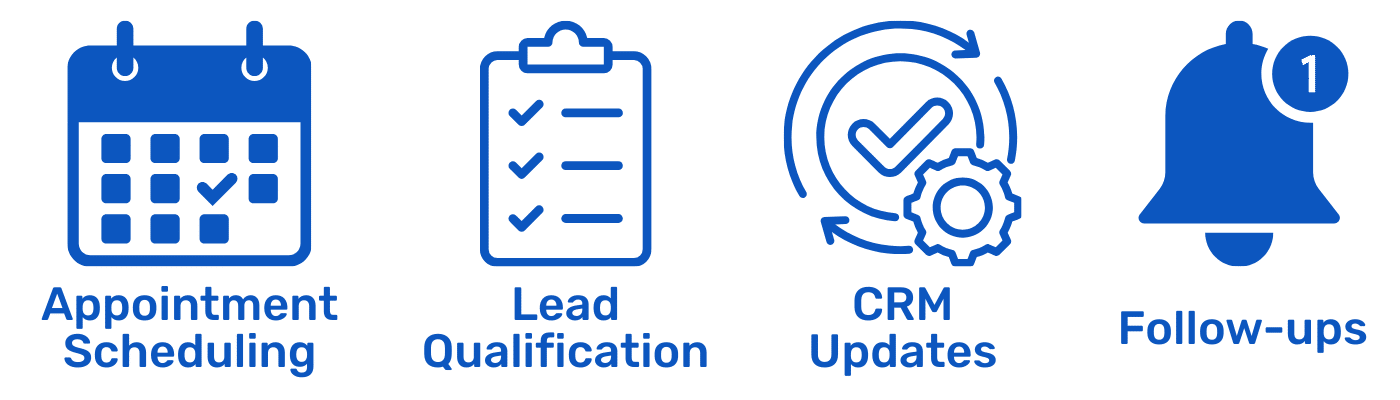
Current AI assistant capabilities go beyond question and answer. Here are specific tasks we have automated for small business clients:
Appointment Scheduling: The AI checks real time availability, books appointments, sends confirmations, and adds calendar reminders. No back and forth emails required.
Lead Qualification: Before routing an inquiry to you, the AI gathers budget, timeline, and project scope information. You receive qualified leads with context instead of raw contact forms.
CRM Updates: Every interaction gets logged automatically with relevant details. Your customer database stays current without manual data input.
Customer Follow-Ups: The AI sends reminders, follow-up messages, and next-step prompts after inquiries or appointments, ensuring no lead slips through the cracks.
These are not experimental features. These systems are already handling real customer interactions for Kansas small businesses every day.
Is an AI Employee Right for Your Business?
Not every task should be automated. And not every business needs an AI employee on day one.
The best use cases are repetitive, time-sensitive interactions that pull owners or staff away from higher-value work. If you regularly answer the same questions, manually schedule appointments, chase incomplete leads, or update customer records by hand, those are strong signals that automation would help, not hurt, your customer experience.
The key is starting with how your business already operates, not forcing generic software into your workflow. When AI is trained around your real processes, it feels like support. When it is bolted on as an afterthought, it feels like a barrier.
If your chatbot feels like more work than help, it may be time to rethink the approach.
We help Kansas small businesses replace generic chatbots with AI employees trained on how your business actually operates.
Schedule a short conversation to see whether an AI employee makes sense for your workflow—and where it could save you the most time.