
Most Google Ads advertisers think seasonality adjustments are only for big sales events like Black Friday.
What they miss is the weeks when demand quietly drops — and Google keeps spending like nothing changed.
That mistake costs Kansas small businesses money every year. We see the same pattern across service businesses, retailers, and B2B companies statewide: a short slowdown hits, Smart Bidding overreacts, budgets drain faster, and performance takes weeks to recover instead of days.
Seasonality adjustments don’t just protect you during spikes. Used defensively, they stop Google from bidding aggressively when conversions are temporarily unavailable — which is where most advertisers leave money on the table.

What Happens When You Skip Defensive Adjustments
Smart Bidding operates on a simple premise: if conversions drop, bid higher to compensate. The algorithm assumes lower performance means more competition or reduced ad quality. It responds by increasing bids to maintain your target ROAS or CPA.
During a genuine slow period, this logic backfires.
Your conversions dropped because demand slowed down for a short time, not because your competitor beat you on bids. Google doesn’t know the difference.
So the algorithm spends more of your daily budget chasing conversions that aren’t coming. Your cost per click rises. Your conversion rate stays flat or drops further. Your budget depletes faster during the exact period when results are weakest.
Then the slow period ends. Your customers return to normal purchasing behavior. But now Smart Bidding has learned the wrong lesson. It saw high bids produce poor results, so it pulls back aggressively. Your ads lose impression share during the recovery period when customers are ready to buy again.
This double penalty shows up in account data as a performance dip that lasts two to three times longer than the actual slow period. We have tracked this pattern in dozens of Kansas small business accounts.
Kansas-Specific Slow Periods You Should Mark
National seasonality guides miss the local patterns that affect Kansas businesses.

Our team has identified several recurring slow periods specific to this region:
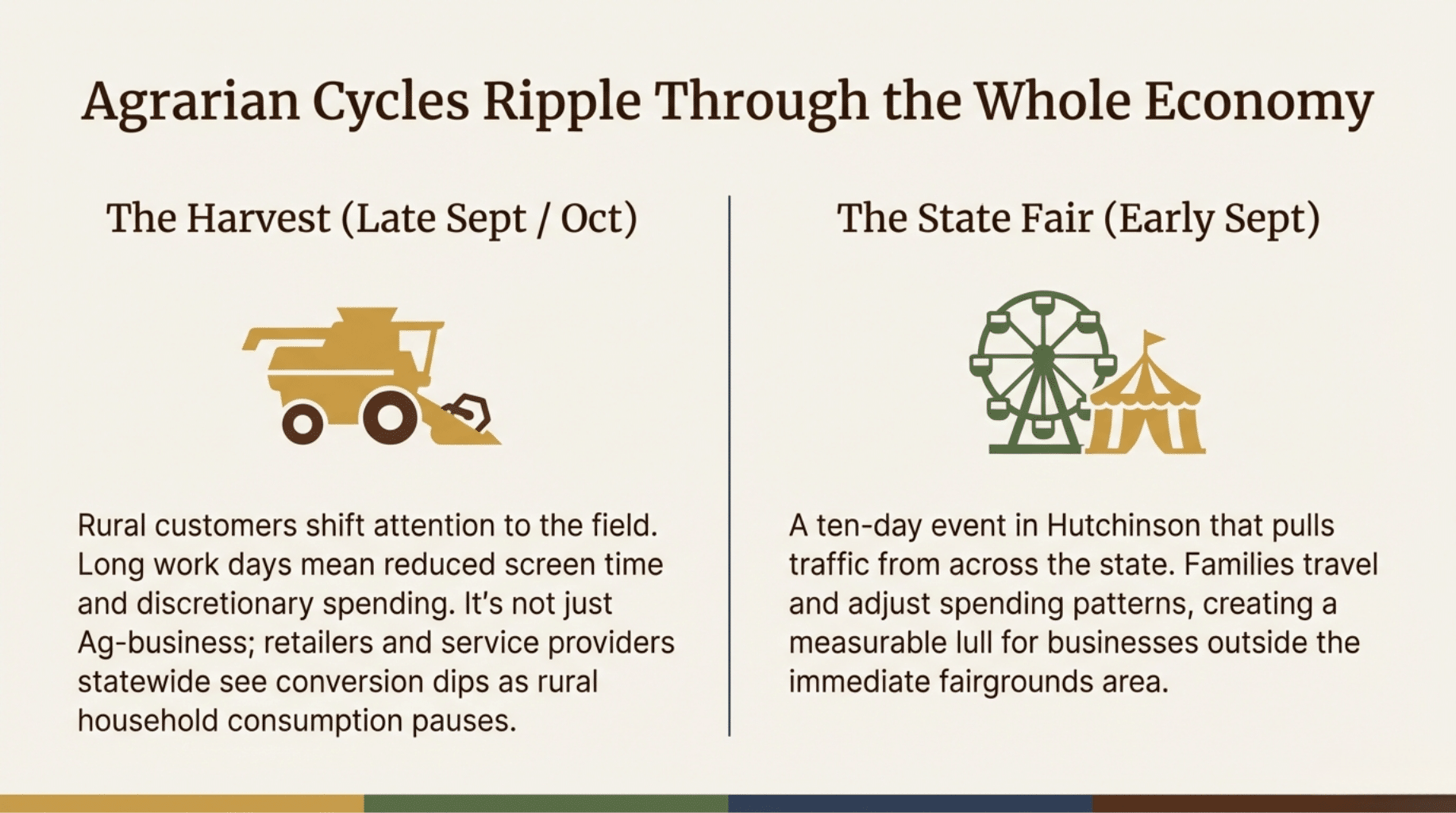
Harvest Season: In late September and October, many rural Kansas customers shift their time and attention toward harvest. When people are working long days or focused on seasonal responsibilities, discretionary spending and online activity often slow down. Agricultural businesses feel this directly, but retailers and service providers across the state can see ripple effects as well — especially if their customer base includes rural households. During these weeks, it’s common to see noticeable short-term dips in conversion rates compared to the rest of the year.
Severe Weather Weeks: Spring tornado season creates unpredictable slow periods. Major storm systems reduce both foot traffic and online purchasing. Historical weather data helps predict which weeks carry higher risk, but you should also set adjustments reactively when severe weather hits your service area.
Major KU and K-State Game Weekends: Regional attention shifts dramatically during rivalry games and tournament play. Businesses in Lawrence, Manhattan, and surrounding areas see measurable conversion drops on game days. The effect is strongest for B2C businesses but shows up in B2B accounts too.
Kansas State Fair: These ten days in early September pull significant traffic from across the state. Hutchinson-area businesses see direct impact, but the effect reaches businesses statewide as families travel and adjust spending.
Local Event Weeks: County fairs, major festivals, and regional events create micro-seasonality specific to your service area. Track your own historical data to identify patterns.
Budget Ranges and Expected Impact
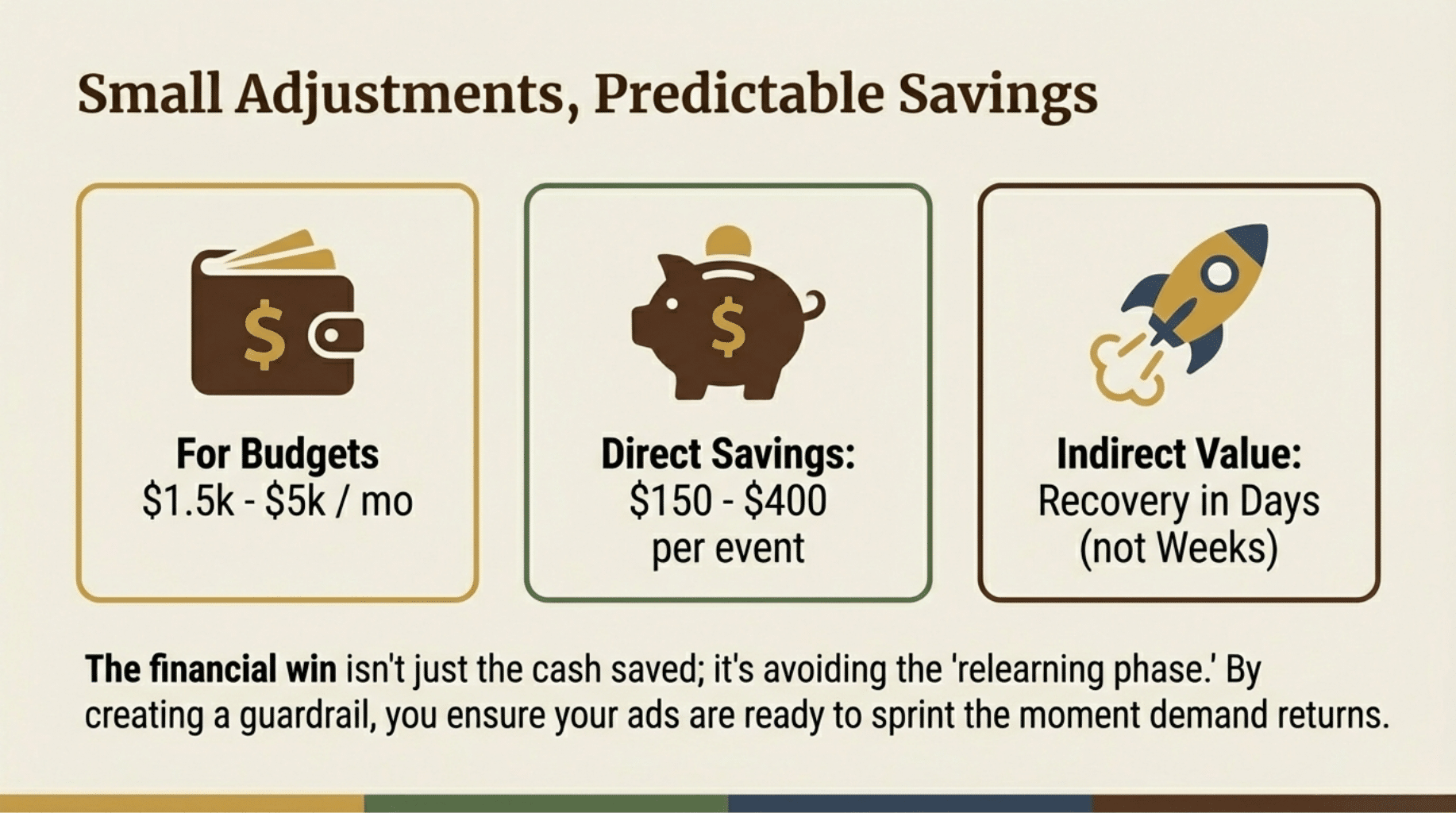
For Kansas small businesses spending $1,500 to $5,000 per month on Google Ads, it’s common to see short, predictable slow periods throughout the year. Making small adjustments to ad budgets or bids during these times typically saves $150 to $400 by avoiding spend when fewer people are ready to buy.
The bigger benefit is what happens after the slow period ends. When ads are left unchanged during a slowdown, performance often stays weak for two to three weeks afterward while Google “relearns” that your ads should be shown more aggressively. Businesses that make simple defensive adjustments usually see performance return within days instead of weeks.
If an adjustment ends up being a little too conservative, the impact is minimal. Ignoring a real slowdown, however, often leads to wasted budget during the slow period and delayed results once demand picks back up. This is true for online advertising on websites, search engines, and social media platforms.
Building Your Kansas Seasonality Calendar
Create a document listing every predictable slow period for your specific business. Include:
- National patterns: Major holidays, summer vacation weeks, tax season for relevant industries.
- Kansas patterns: Harvest season, severe weather probability by month, major state events.
- Local patterns: Events specific to your city or county, university schedules if relevant.
- Historical account patterns: Review your Google Ads data from the past two to three years. Identify weeks where conversion rates dropped without obvious explanation. Cross-reference against local events and weather records.
For each slow period, note the typical duration and the historical conversion rate change. This becomes your reference document for setting adjustments each year.
Implementation Checklist
Review your Google Ads conversion data for the past 24 months. Identify weeks with conversion rate drops of 15 percent or more. Research what caused each dip. Build your slow period calendar with specific dates and expected conversion rate changes.
Set calendar reminders to create seasonality adjustments 48 hours before each predicted slow period. After each adjustment period ends, compare actual results against your prediction and refine your estimates for next year.
The process takes two to three hours for initial setup. Maintenance requires 15 minutes per adjustment, or roughly two hours annually for most Kansas small businesses.
This defensive approach to seasonality adjustments protects your ad budget during periods when conversions are genuinely unavailable. It prevents Smart Bidding from learning the wrong lessons. And it positions your campaigns for faster recovery when your customers return to normal purchasing behavior.
Your Next Step
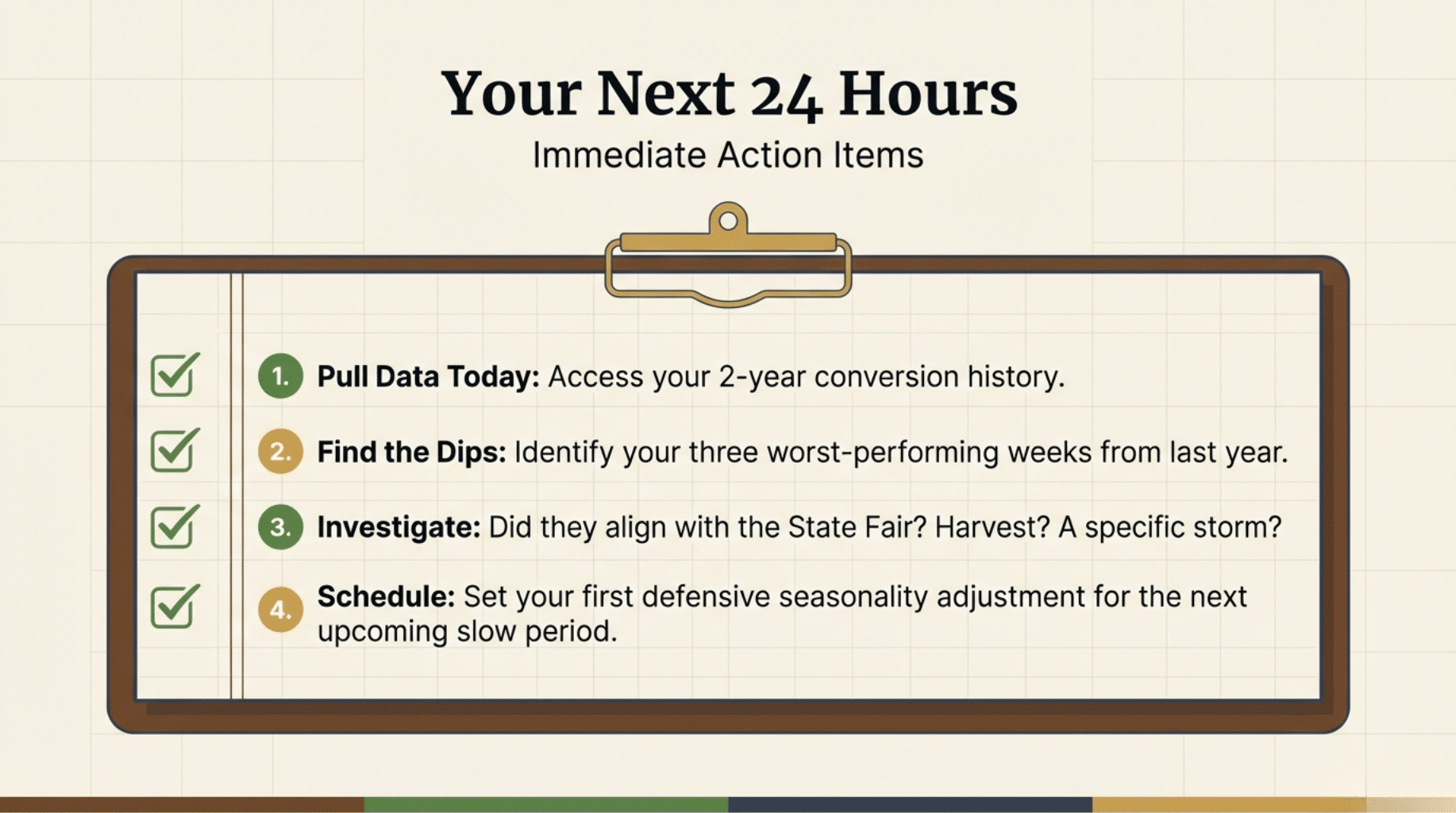
Pull your Google Ads conversion data for the past two years. Identify your three worst-performing weeks each year. Research what local events, weather patterns, or Kansas-specific factors coincided with those dips. Set your first defensive seasonality adjustment for the next predictable slow period in your calendar.
If you need help analyzing your account data or building a Kansas-specific seasonality strategy, our team works with small businesses across the state on exactly this type of campaign optimization. Reach out to start a conversation.