Every software vendor in America has discovered the same marketing trick. Add one API call to ChatGPT, slap “AI-powered” on the homepage, and watch the leads roll in.
The industry has a name for this: AI washing. And it is costing small business owners real money.
AI washing is when companies exaggerate or misrepresent the role of artificial intelligence in their products, typically to justify premium pricing. It is everywhere. CRMs are AI-powered. Scheduling tools are AI-powered. I saw a lawn care app last month that called itself AI-powered because it sends automated text reminders. That is not AI. That is a cron job with a phone number.
For small business owners trying to make smart technology investments, this is a real problem. When every tool claims to be AI-powered, the label tells you nothing. You end up paying premium prices for basic automation wrapped in buzzwords.
I run a software development and digital marketing company in Kansas. I build AI systems for small businesses every day. And I am tired of watching business owners get burned by products that promise intelligence and deliver a flowchart.

What “AI-Powered” Should Mean
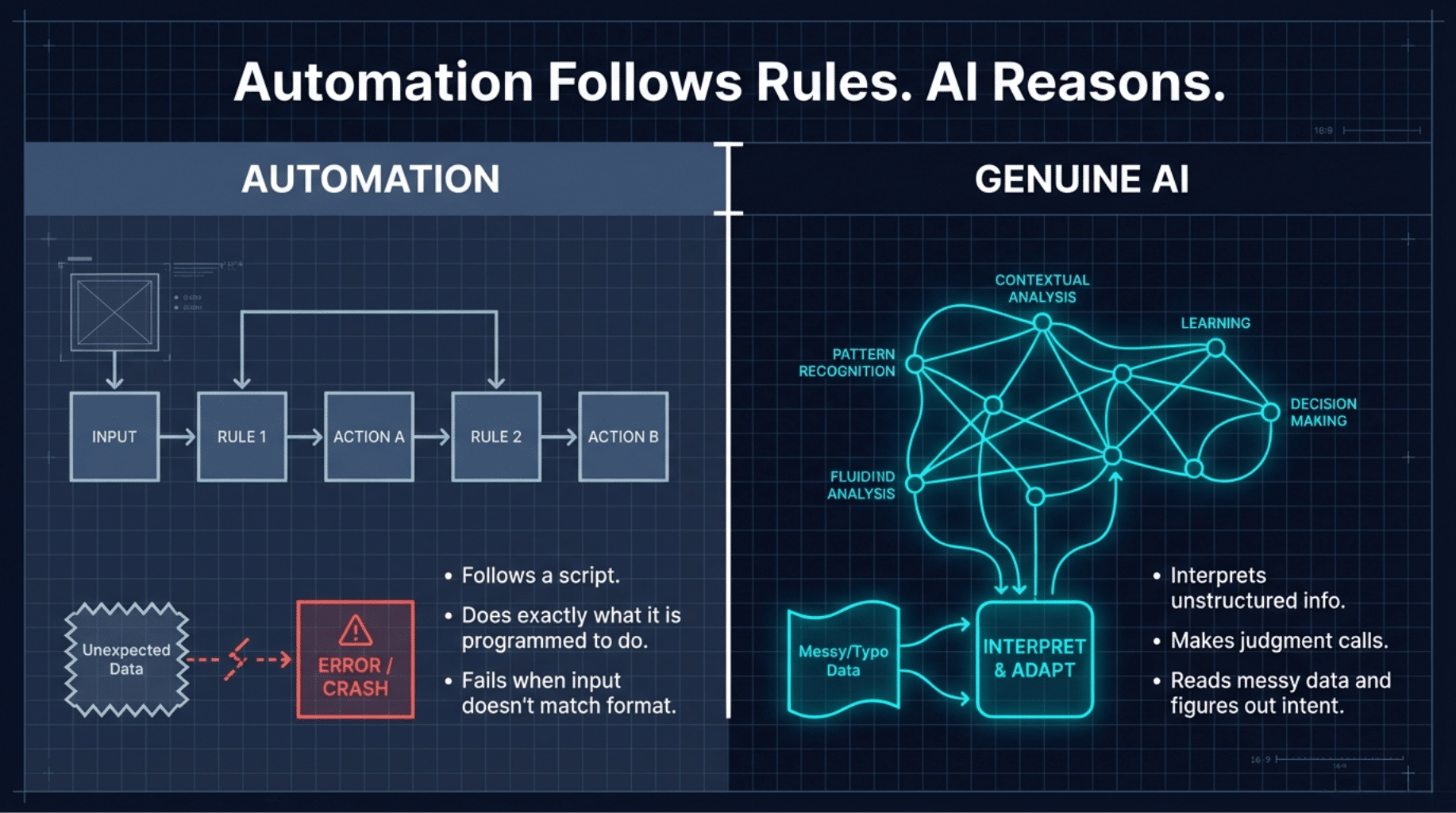
AI, at its core, means a system that reasons. It interprets unstructured information, makes judgment calls, and adapts when something unexpected happens.
When I build an AI system for a client, the system reads messy data and figures out what to do with it. It handles situations it has never seen before. It improves over time. If a customer emails in with a typo-filled, poorly formatted request, the system still understands what they need and responds appropriately.
That is fundamentally different from a tool that follows a script. A script does exactly what it was programmed to do, nothing more. If the input does not match the expected format, the script fails or produces garbage output. The real question is AI vs. automation, and most “AI-powered” products fall firmly in the automation category.
Both have value. Automation is powerful and efficient. But they are not the same thing, and pretending they are misleads buyers.
What AI Washing Looks Like in Practice
Most products guilty of AI washing fall into one of these categories:
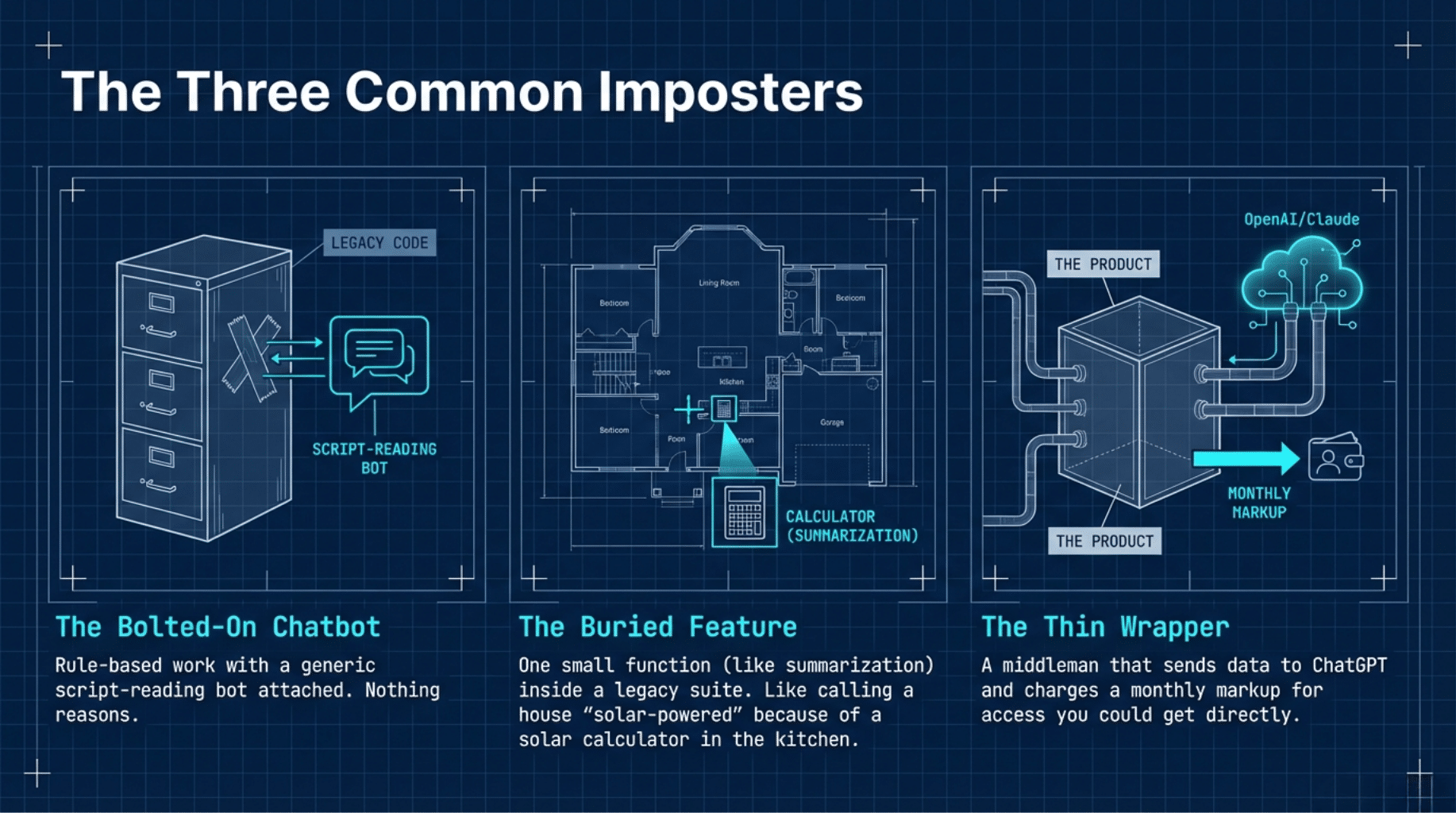
- Basic automation with a chatbot bolted on. The product does the same rule-based work it always did. The chatbot answers FAQs from a script. Nothing reasons. Nothing adapts.
- A single AI feature buried in a larger product. The tool might use AI for one small function, like summarizing a document, but the rest of the product is standard software. Calling the whole product “AI-powered” because of one feature is like calling your house solar-powered because you have a solar calculator on the kitchen counter.
- A thin wrapper around someone else’s AI. The product sends your data to ChatGPT or Claude, displays the response, and charges you a monthly fee. You are paying a middleman for something you could access directly.
None of these are inherently bad products. Some of them are useful. The problem is the labeling. When a scheduling tool and a system that autonomously manages your customer communications both call themselves “AI-powered,” the term loses all meaning.
Why AI Washing Costs Your Business Money
If you are a small business owner evaluating AI tools for your business, misleading AI labels cost you money and time.
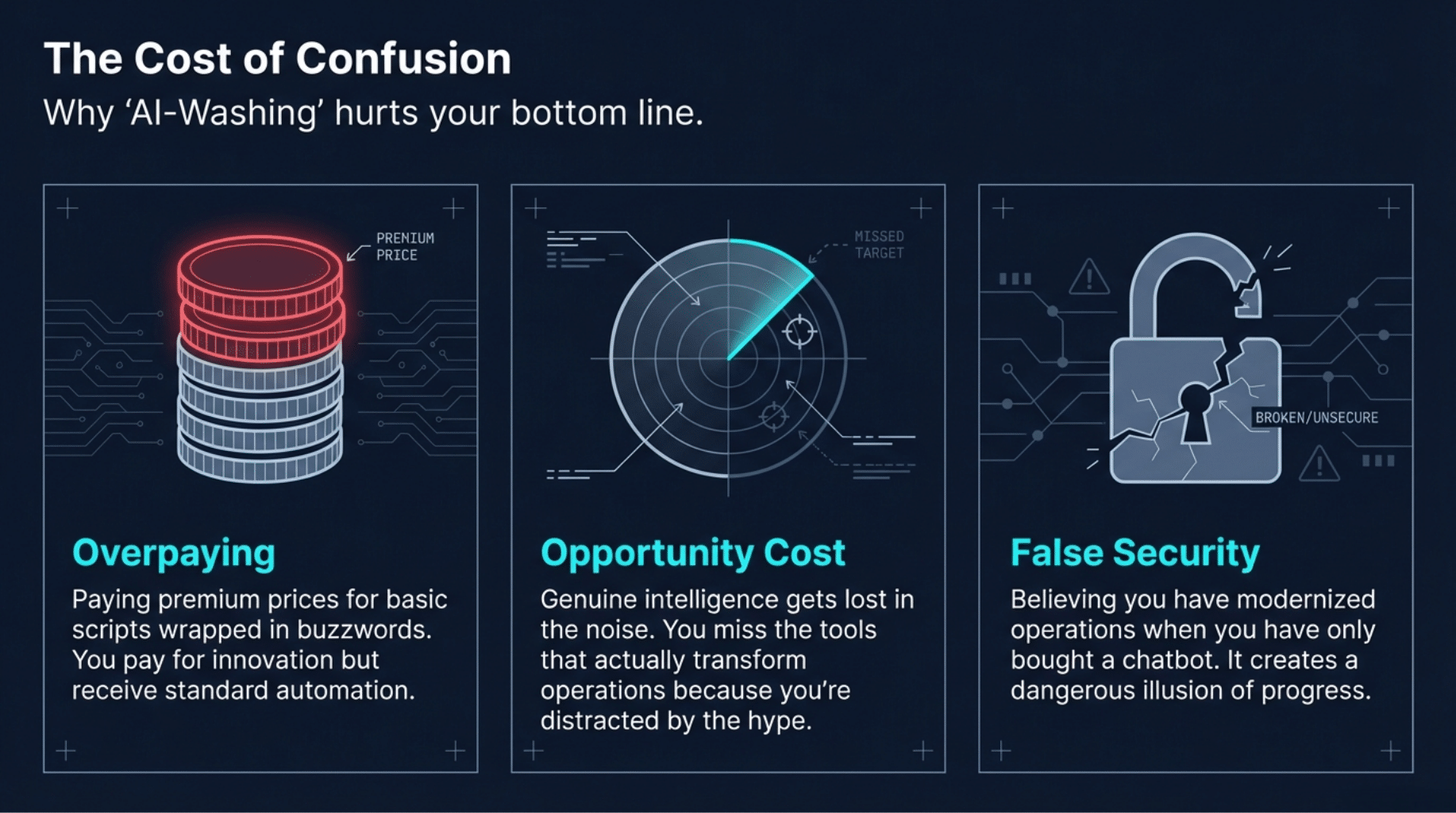
- You pay more for products that do not deliver more. AI is a premium feature, and vendors price accordingly. If the “AI” in the product is a basic chatbot, you are overpaying.
- You miss out on tools that would help. For example, an all-in-one marketing platform that consolidates your tools into a single dashboard is more valuable than five separate apps with AI labels. When every product claims AI capabilities, the ones with genuine intelligence get lost in the noise.
- You make decisions based on bad information. If you believe you have already implemented AI in your business because your CRM has a chatbot, you might skip the solutions that would deliver real operational improvement.
Regulators have taken notice too. The SEC has fined companies for making misleading AI claims to investors. If the government considers AI washing serious enough to penalize, you should consider it serious enough to question.
How to Spot AI Washing Before You Buy
Here is what I tell my clients when they are evaluating any tool that claims to be AI-powered. Ask these five questions:
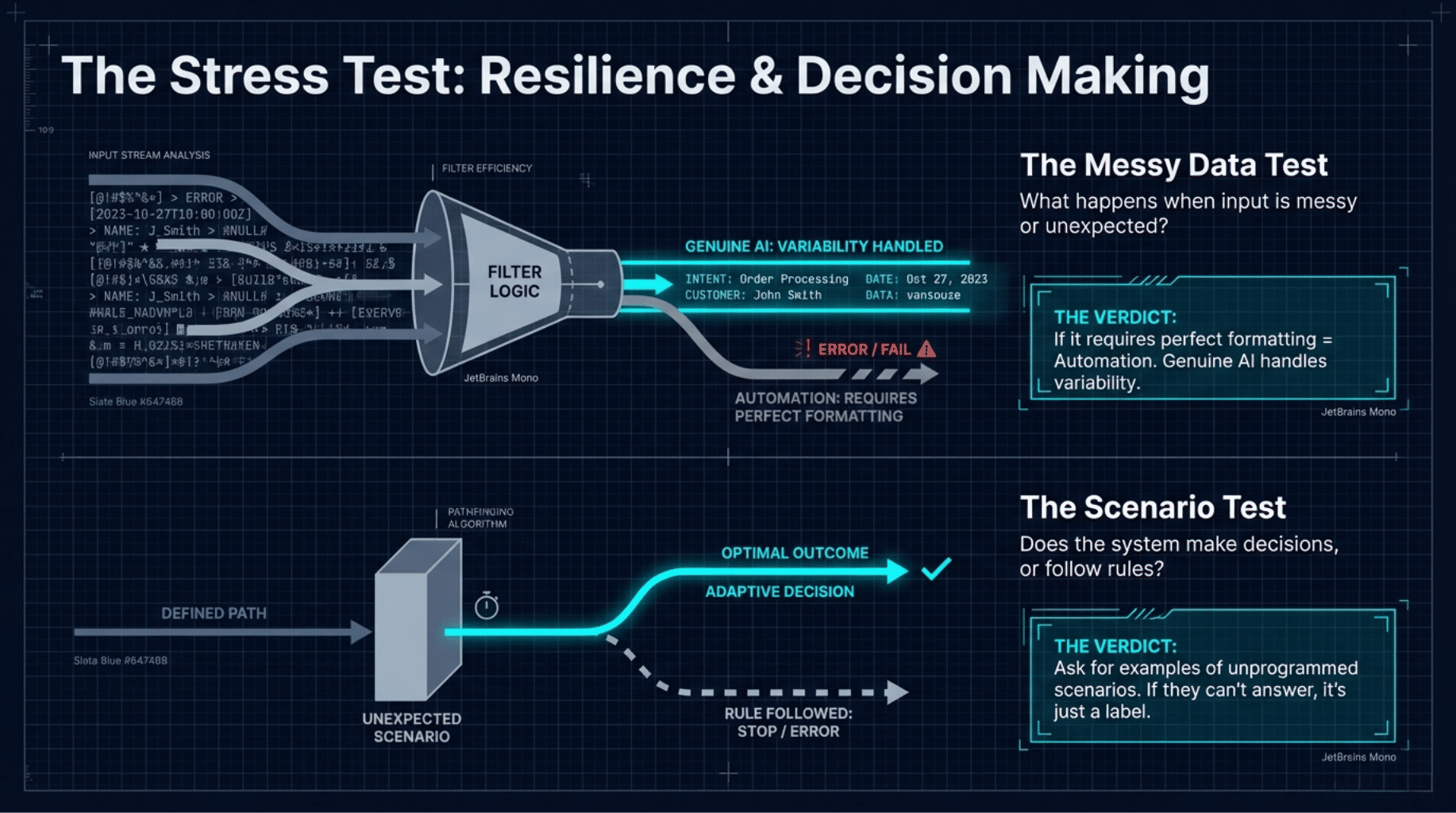
- What happens when the input is messy or unexpected? If the system requires perfectly formatted data to function, it is automation, not AI. Genuine AI handles variability.
- Does the system make decisions, or does it follow rules? Ask for a specific example of the system encountering something it was not explicitly programmed for. How did it respond? If the vendor cannot answer this question, the “AI” is likely a marketing label.
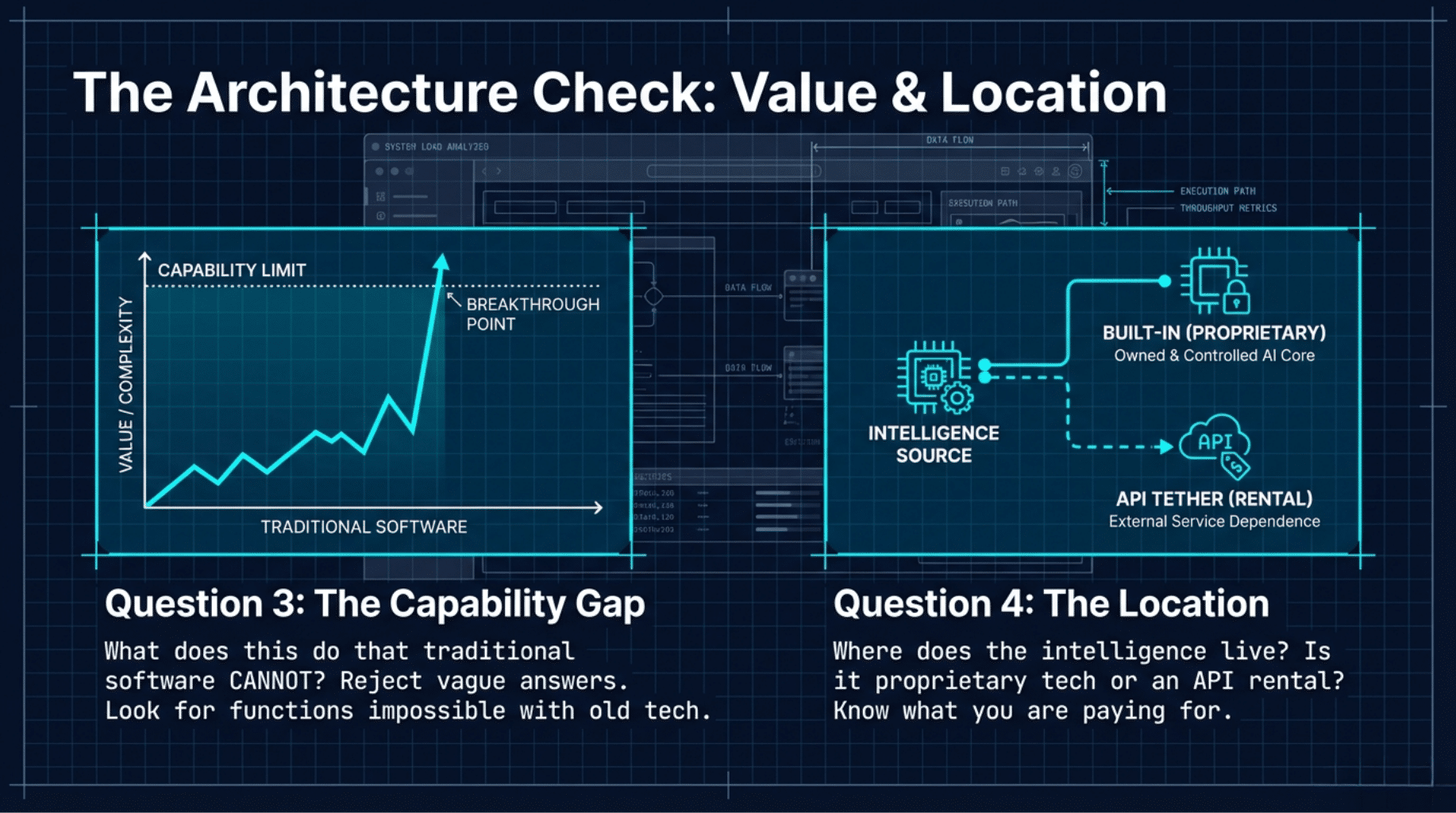
- What does the system do that was not possible with traditional software? This is the most revealing question. If the answer is vague (“it’s smarter” or “it uses machine learning”), push harder. Real AI capabilities have specific, describable functions.
- Where does the intelligence live? Is the AI built into the product, or is it calling an external API? Neither is inherently better, but understanding the architecture tells you what you are paying for and what happens if that external service changes its pricing or capabilities.
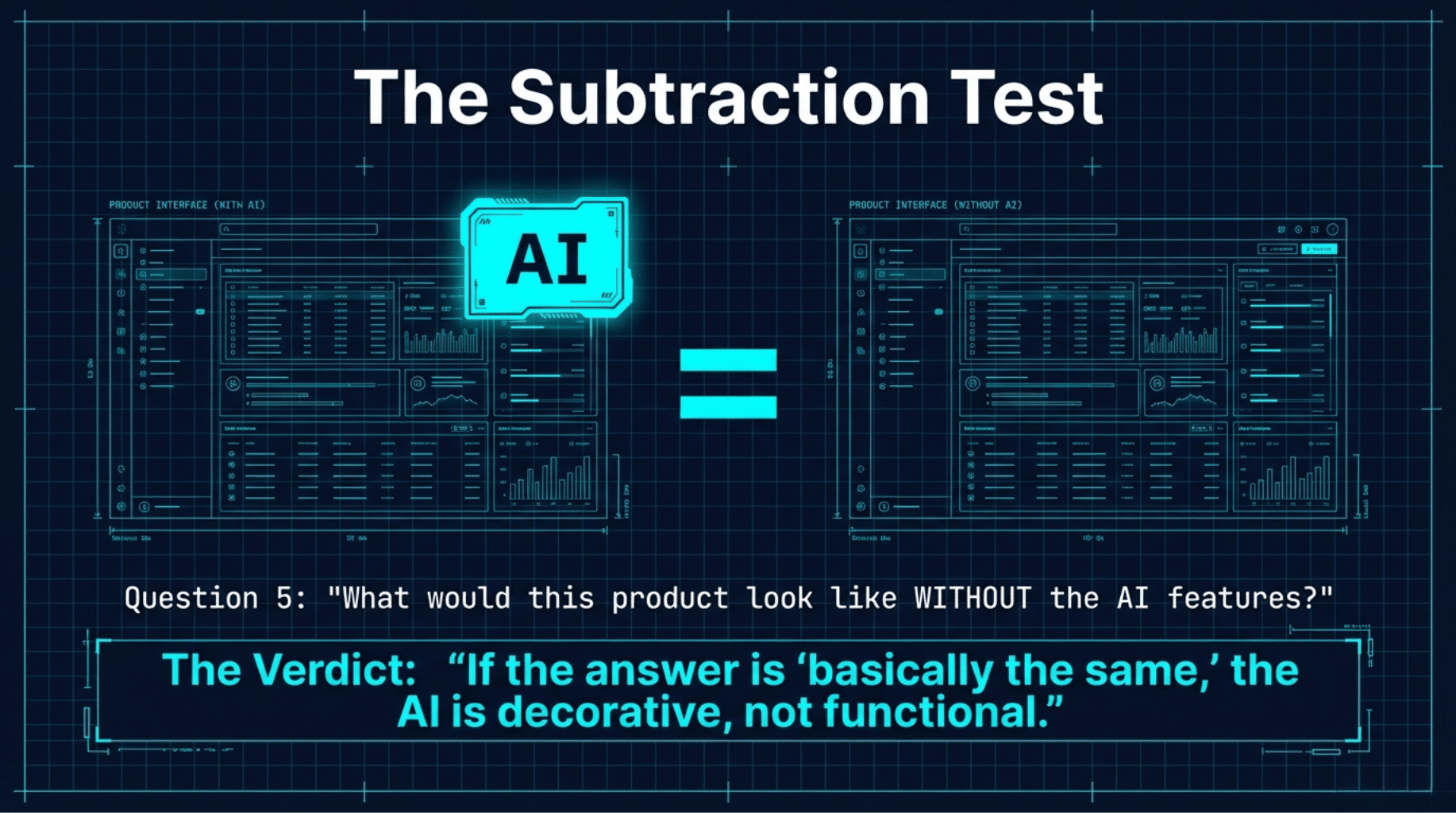
- What would this product look like without the AI features? If the answer is “basically the same,” the AI is decorative.
These questions will not make you a technical expert. They will make you a harder target for empty marketing.
The Label Problem Is Solvable
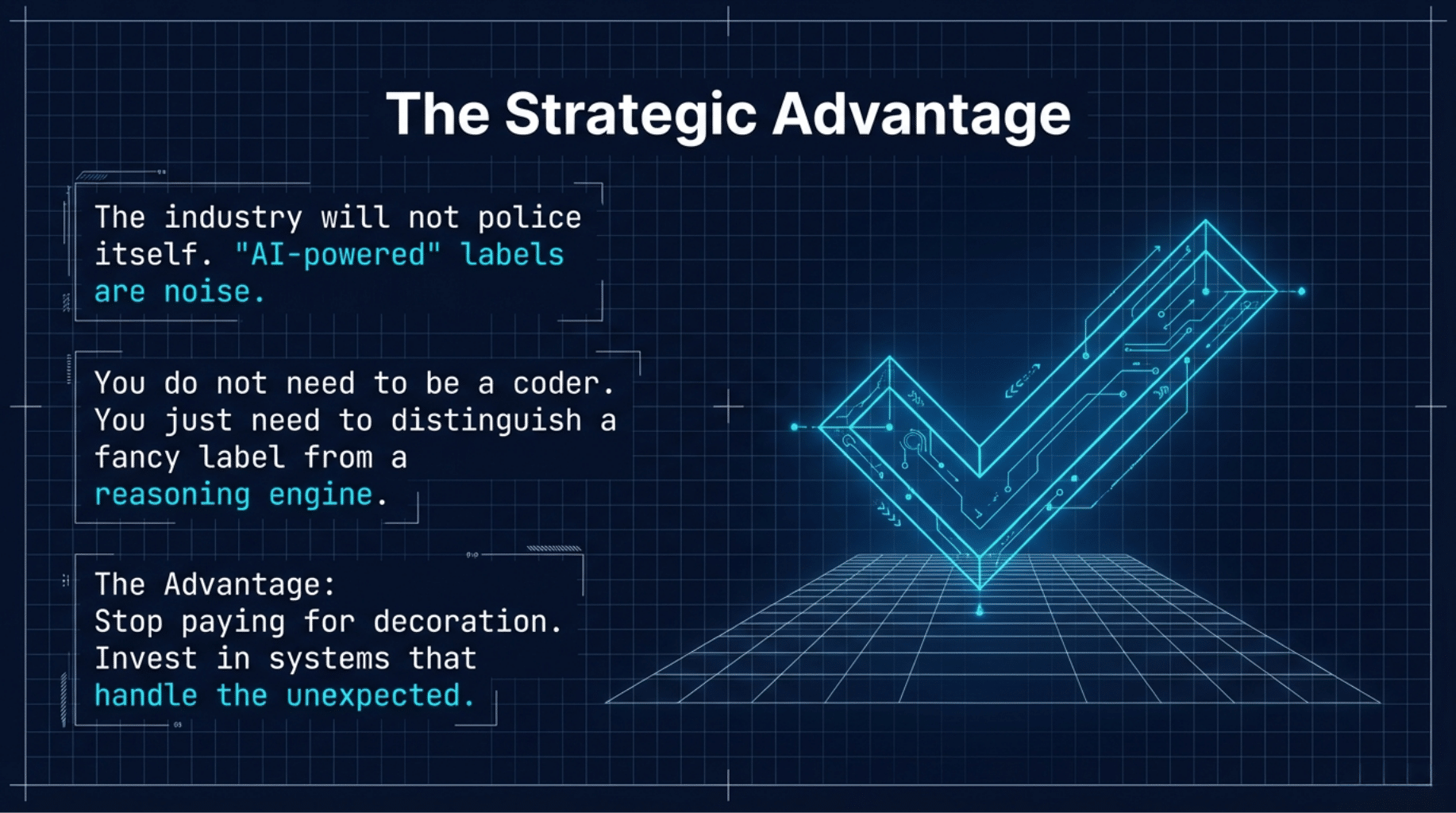
I do not expect the industry to police itself. “AI-powered” will continue to mean whatever vendors want it to mean.
But you do not have to accept vague claims. The next time a sales rep tells you their product is AI-powered, ask them what the system does when something goes wrong. Their answer will tell you everything.
The businesses that will benefit most from AI are the ones that learn to distinguish real intelligence from a fancy label. That starts with asking better questions.
If you need help evaluating technology for your business or building something that works, that is what we do.