

Evergreen content for small business owners can be the difference between constantly chasing new content and building something that actually lasts.
Creating content for your small business can often feel like a hamster wheel that never stops spinning. Between social posts, blogs, and keeping up with trends, the pressure to constantly produce can lead to burnout. And when your efforts don’t show results in search engines, the frustration only grows.
But what if there was a better way—a way to create content that keeps working for your business long after you publish it and helps improve your SEO over time?

Enter evergreen content. This type of content stays relevant and valuable well beyond its publish date. It helps you break free from the nonstop content grind while building long-term visibility in search results—bringing in more traffic and leads, even while you sleep.
What Is Evergreen Content?
As the name suggests, evergreen content remains relevant over time, like an evergreen tree that keeps its leaves year-round. Your audience can return to it later and still find useful information.
It’s important to understand the difference between permanent and evergreen content. Permanent content simply stays on your website indefinitely—like an old event announcement or your About page. It may never be deleted, but that doesn’t guarantee it’s still helpful or relevant.
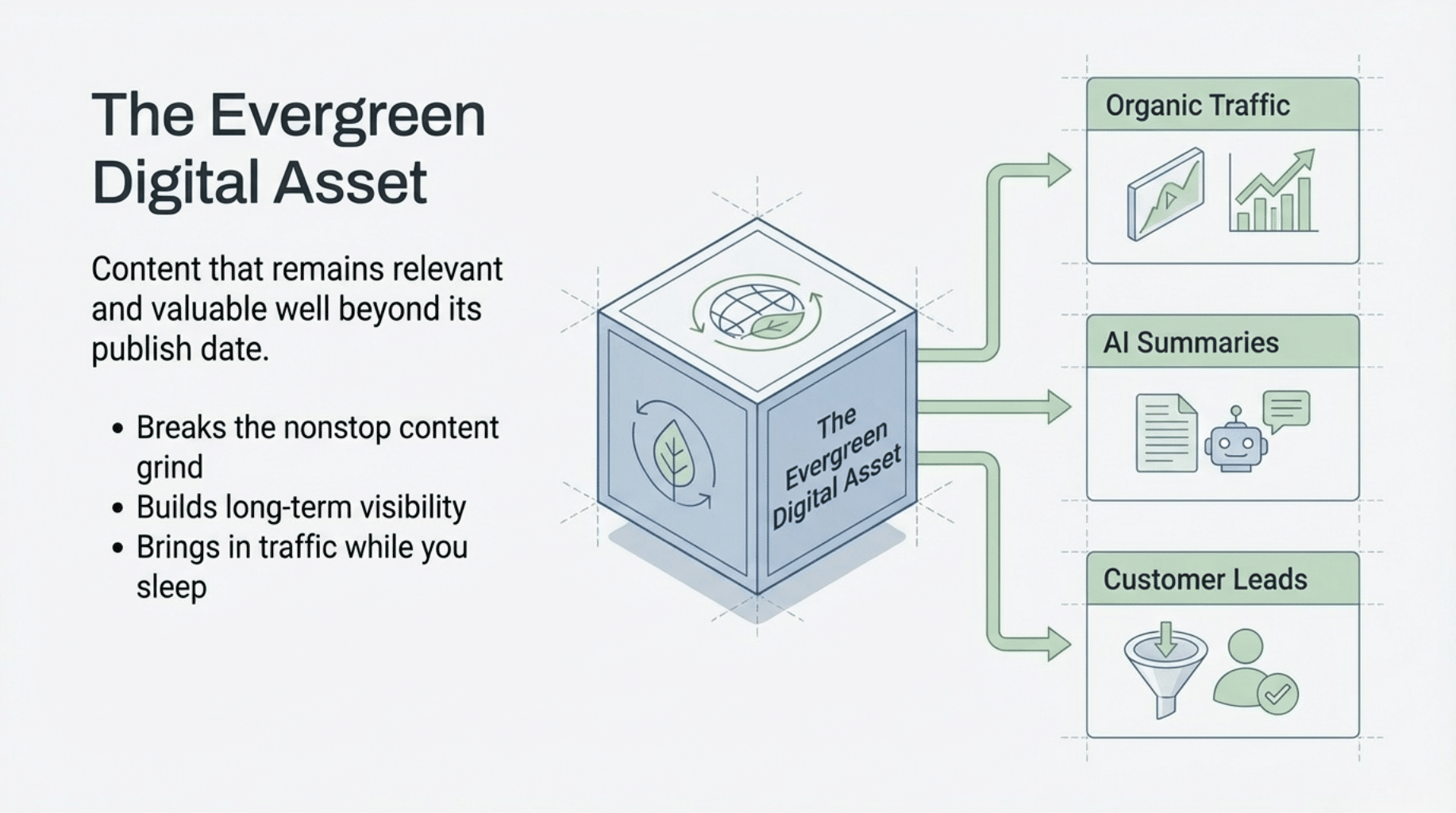
Evergreen content, by contrast, stays useful over time. It answers ongoing questions and provides lasting value—making it especially powerful as evergreen content for small business marketing.
Examples of Evergreen Content vs. Timely Content
To differentiate between evergreen and timely content, ask yourself: Will this be useful six months or even a year from now?
Here are some examples of each type of content:
Evergreen:
- “How to Choose the Right Electrician” — a timeless guide that answers a common question
- “FAQs About Our Services” — ongoing answers that rarely change
- “Beginner’s Guide to Budgeting” — a skill people always need
Timely (Non-Evergreen):
- “Our Spring Sale Ends Friday” — valuable short-term but quickly outdated
- “2024 Holiday Hours” — useful now, but irrelevant next year
- “Top Trends This Summer” — seasonal and fleeting
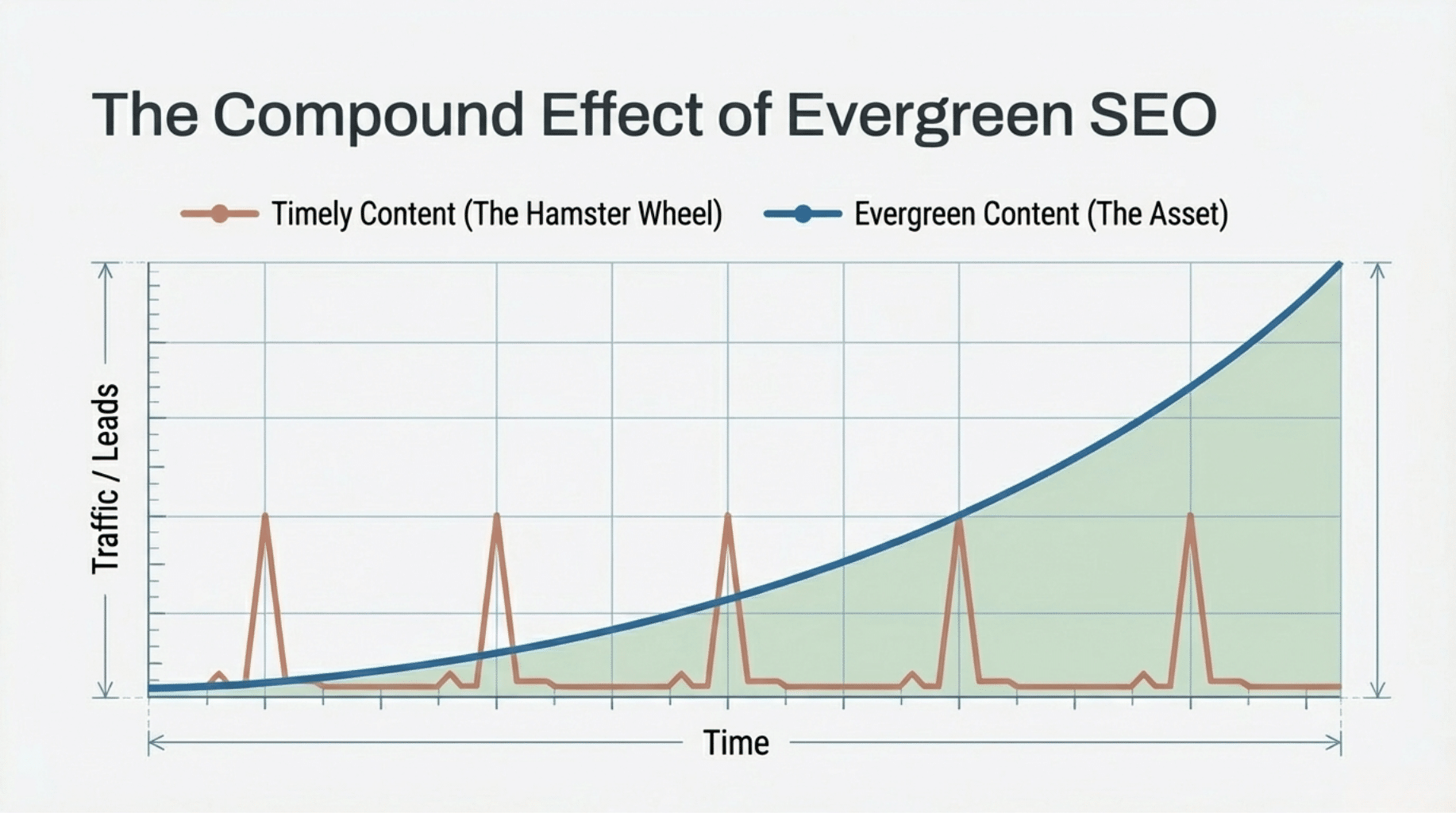
There’s definitely a place for timely content, but if all your content expires quickly, you’ll be stuck constantly creating just to stay visible. That’s why evergreen content for small business owners is so valuable, it breaks that cycle.
Why Evergreen Content for Small Business Owners Still Matters in 2026
Evergreen content quietly supports your marketing long after it’s published. While trends come and go, evergreen pieces keep bringing value to your business—both in audience connection and search performance. Here’s why it’s worth the effort:
Reduces Content Burnout
Instead of scrambling for new ideas weekly, focus on fewer, higher-quality pieces that can be repurposed across channels, stretching their value without added stress.
Improves SEO Over Time
Relevant, lasting content has the potential to rank well in search results for months or years, growing your organic traffic and authority without paid ads. This is where evergreen content for small business becomes a long-term SEO asset rather than a short-term tactic.
Builds Trust and Credibility
Helpful guides and FAQs show your expertise and position you as a trusted resource—turning curious visitors into loyal customers.
Aligns with Google’s Focus on Helpful Content
Search engines, like Google, prioritize content that genuinely helps users. Evergreen content naturally fits this, answering real questions and solving problems over time.
Evergreen Content in the Age of AI Search
Search is evolving. Today, platforms like Google and AI tools don’t just show links—they generate answers.
And where do those answers come from? Clear, helpful, well-structured content.
Evergreen content is especially valuable in this environment because it:
- Answers common, ongoing questions
- Stays relevant over time
- Builds authority around key topics
That means your content isn’t just working to rank, it’s working to be referenced, summarized, and recommended. A strong evergreen article can continue driving visibility across search, maps, and AI-powered results long after it’s published.
How to Create Evergreen Content for Your Business
Start by identifying common customer questions, pain points, or objections. These are excellent evergreen topics and the foundation of strong evergreen content for small business growth.
Popular formats include:
- How-to articles (e.g., “How to Prepare Your Home for a Generator Installation”)
- Lists (e.g., “7 Things Every First-Time Airbnb Guest Should Know”)
- Guides (e.g., “A Complete Guide to Building a Small Business Website”)
- Tutorials (e.g., “How to Set Up Your Google Business Profile”)
- Definitions/Explanations (e.g., “What Is Local SEO, and Why Does It Matter?”)
As you write:
- Add internal links to related pages or posts
- Include a strong call to action—contact, book, or read more
- Build flexibility so you can update the content over time, avoiding hard dates or specifics that age quickly
Evergreen content isn’t about being flashy—it’s about being useful. Done right, one post can work for your business for years.
Final Thoughts
Content creation doesn’t have to feel endless. By focusing on evergreen content, topics that stay relevant and valuable, you can reduce burnout, build trust, and create a steady stream of traffic and leads over time.
Instead of constantly starting from scratch, you’re building a library of content that continues to work for your business—showing up in search results, answering customer questions, and supporting your growth long after it’s published.
If you haven’t started yet, now’s the time. The questions your customers ask every day are your best opportunities. With the right approach, evergreen content for small business can deliver value for months or even years.
If you’re ready to turn that content into a real growth strategy, we can help. Explore our SEO and content marketing services to see how we build systems that keep working for your business long after they’re launched.