
Most small business marketing is still built around one assumption:
someone searches, finds your website, then decides whether to contact you.
That sequence is changing.
If someone searches “best HVAC company near me” or asks an AI assistant for a recommendation, they may see a short summary of a few businesses pulled from reviews, listings, and website content before they ever visit a website. By the time a potential customer reaches out, they’ve often already formed a shortlist or made up their mind entirely.
This shift doesn’t mean websites or search no longer matter. It means the decision is happening earlier, and businesses need to adjust to that reality.
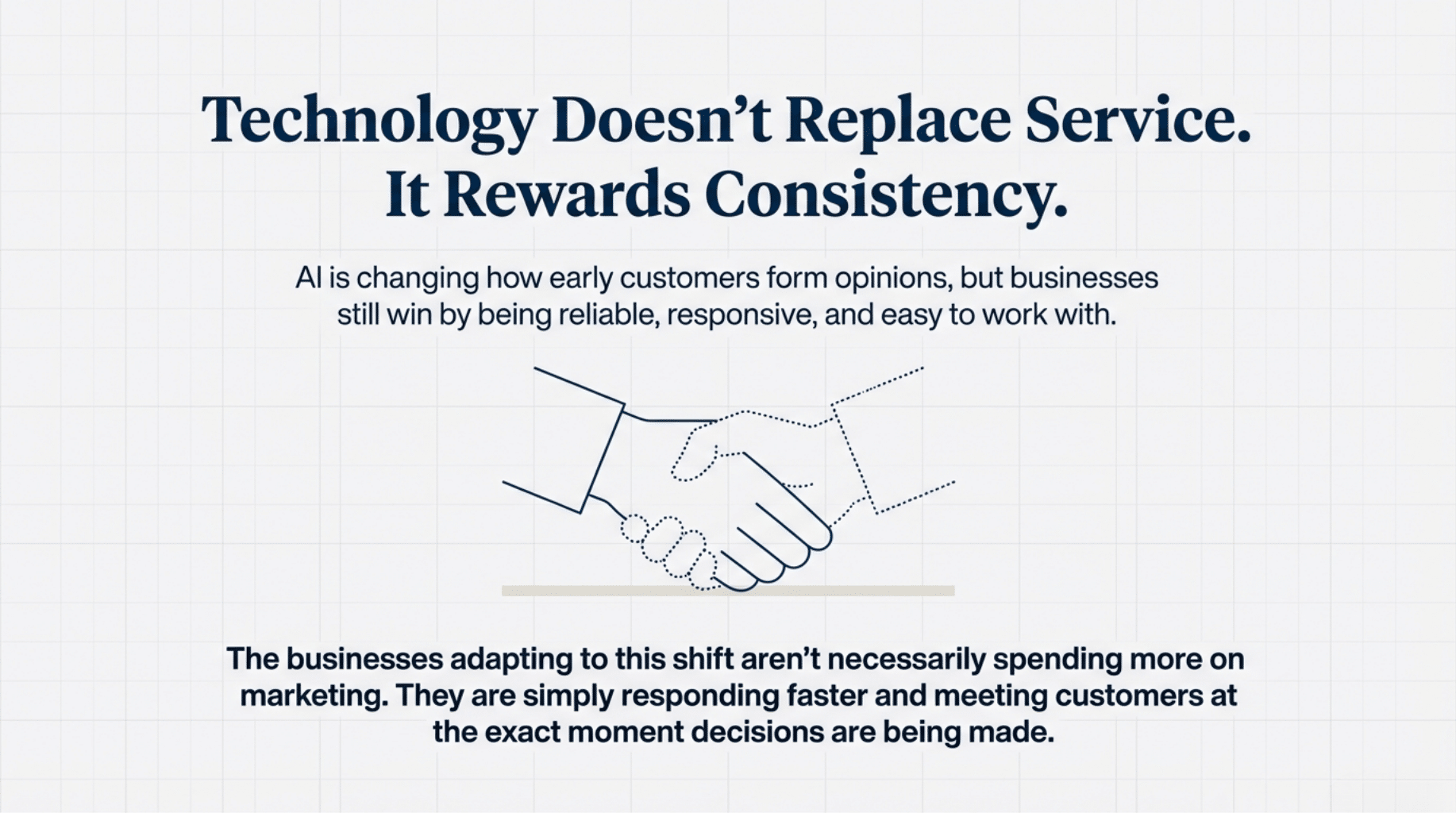
At Wildman Web Solutions, we’ve seen this change play out across small businesses we work with. The ones adapting aren’t necessarily spending more on marketing. They’re responding faster, following up better, and meeting customers at the moment decisions are being made.
The First Impression Often Happens Before Anyone Sees Your Website
When someone uses AI-driven search or voice tools to research a service, the information they see comes from many sources: business listings, reviews, location data, and website content.
That summary shapes perception early.
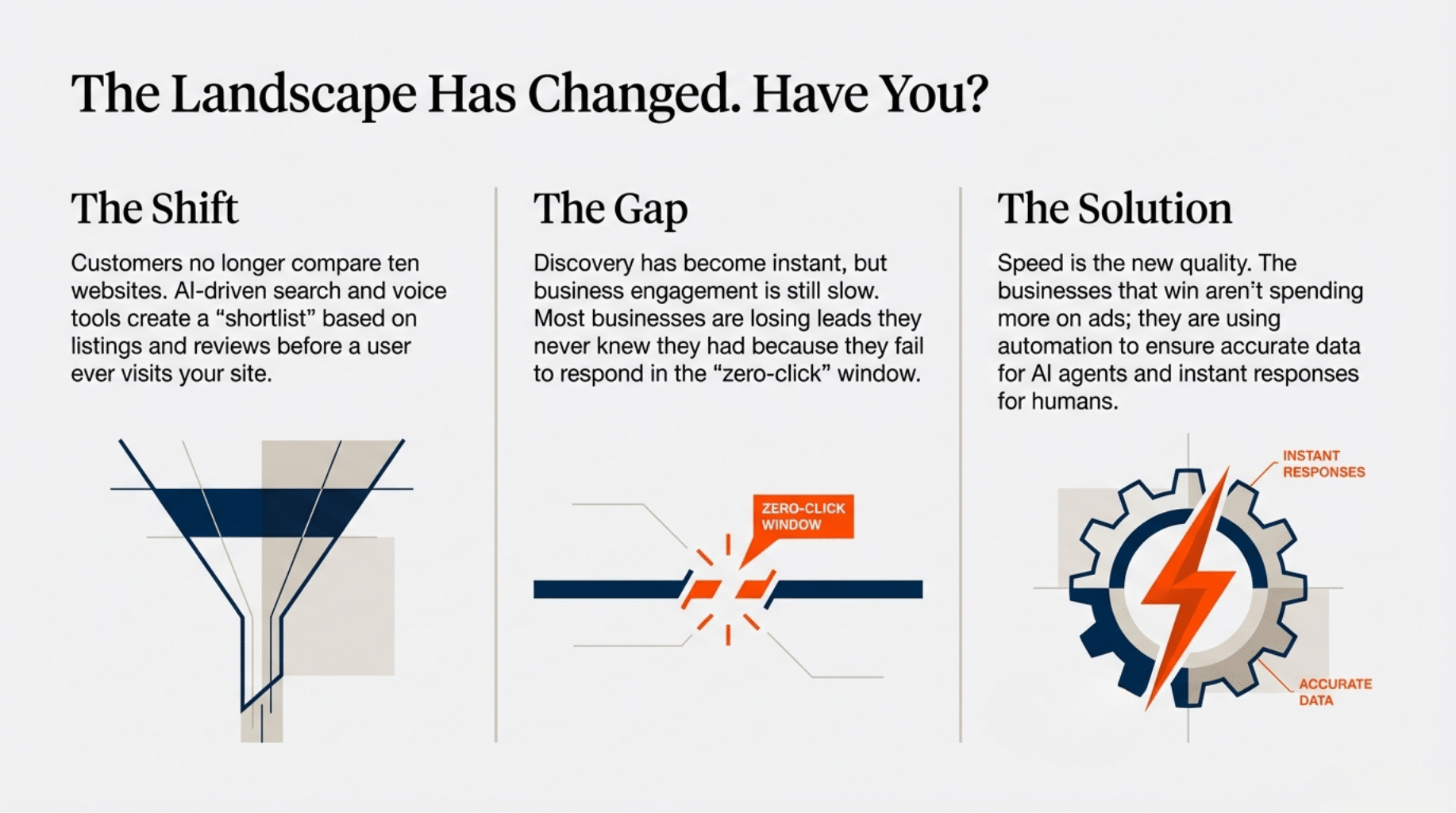
In many cases, this happens in what’s called a zero-click window — the moment when a customer gets enough information directly in search results or an AI summary that they don’t need to click multiple websites. They may see your rating, services, hours, and even a short description before ever visiting your site.
Because of this, the decision process has become shorter and more selective.
Most people don’t compare ten websites anymore. They narrow their options quickly, visit one or two businesses they already trust then contact the one they want to work with.
That means your online presence has to be understandable not just to people, but to systems that interpret and summarize your business on their behalf.
Clear service descriptions, consistent business information, accurate categories, and up-to-date listings all help ensure your business is represented correctly when AI-driven tools surface options.
This is why we recommend routine audits of business listings and directories. Inconsistent names, phone numbers, or service descriptions don’t just confuse customers, they reduce visibility and trust in automated summaries.
Discovery Has Improved. Engagement Has Not.
AI has made it easier for customers to find businesses.
It has not made it easier for businesses to respond.
Most small businesses still miss inquiries because:
- Calls come in after hours
- Forms sit unanswered overnight or on weekends
- Follow-ups are inconsistent or delayed
This creates a gap between being discovered and being chosen.
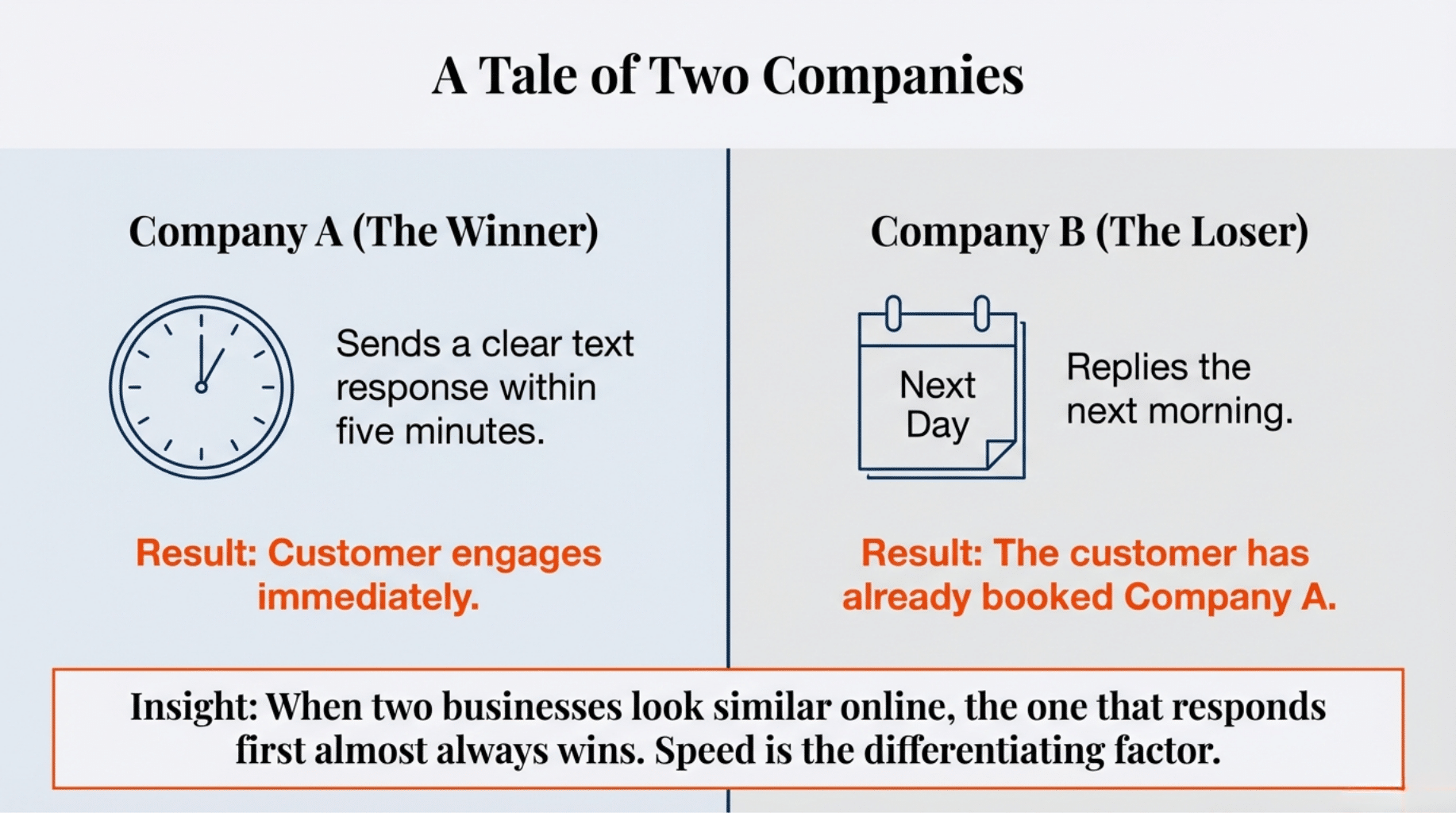
When two businesses look similar online, the one that responds first almost always wins. Speed and clarity now matter as much as visibility.
Imagine two roofing companies appear in search results. One sends a clear text response within five minutes. The other replies the next morning. Even if both do excellent work, the faster company is far more likely to win the job.
Why Responsiveness Now Drives Growth
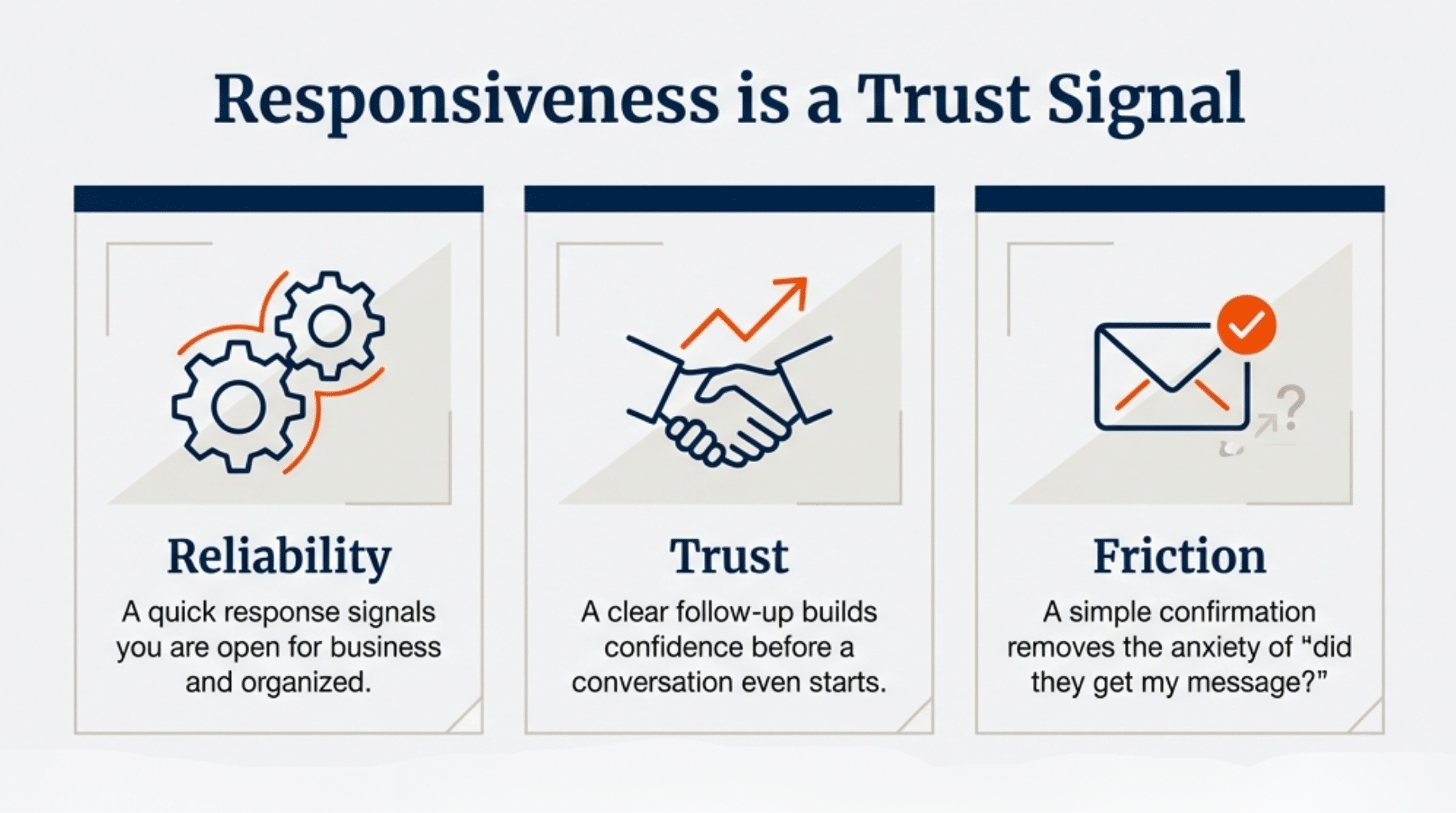
Customers don’t expect instant perfection, but they do expect acknowledgment.
A quick response signals reliability. A clear follow-up builds trust. A simple confirmation removes friction.
We consistently see that:
- Faster responses lead to higher contact rates
- Simple follow-up systems recover leads that would otherwise go cold
- Consistent communication often outperforms aggressive advertising
None of this requires replacing staff or becoming impersonal. It requires better systems.
Using Automation to Support—Not Replace—Your Team
Automation works best when it handles the moments your team can’t.
Common examples include:
- Capturing or routing after-hours calls
- Sending immediate text confirmations after form submissions
- Following up with leads who didn’t book right away
- Staying in touch with past customers at appropriate intervals
Used well, these tools make a business feel more attentive, not more automated.
The goal isn’t to remove the human element. It’s to make sure no opportunity is missed before a human steps in.
A Balanced Approach Works Best
The most effective small businesses balance two types of effort:
Reactive
- Accurate business information
- Clear service descriptions
- Fast responses to inbound inquiries
Proactive
- Thoughtful follow-up with past customers
- Simple check-ins with unconverted leads
- Ongoing communication that keeps the business top of mind
One simple follow-up strategy often outperforms complex campaigns because it reaches people who already trust you.
What to Focus On Right Now
If you’re wondering where to start, keep it simple:
- Make sure your business information is accurate everywhere it appears
- Measure how long it takes you to respond to inquiries
- Identify where leads are being missed (nights, weekends, follow-up)
- Add one system to close that gap
Start small. Measure results. Build from there.
AI is changing how early customers form opinions, but businesses still win by being reliable, responsive, and easy to work with.
Technology doesn’t replace good service. It rewards the businesses that deliver it consistently.
If you’re worried that delayed responses or missed follow-ups are costing you leads, Wildman Web Solutions can help. Schedule a quick call to see how we can make your business more responsive and capture every opportunity.