
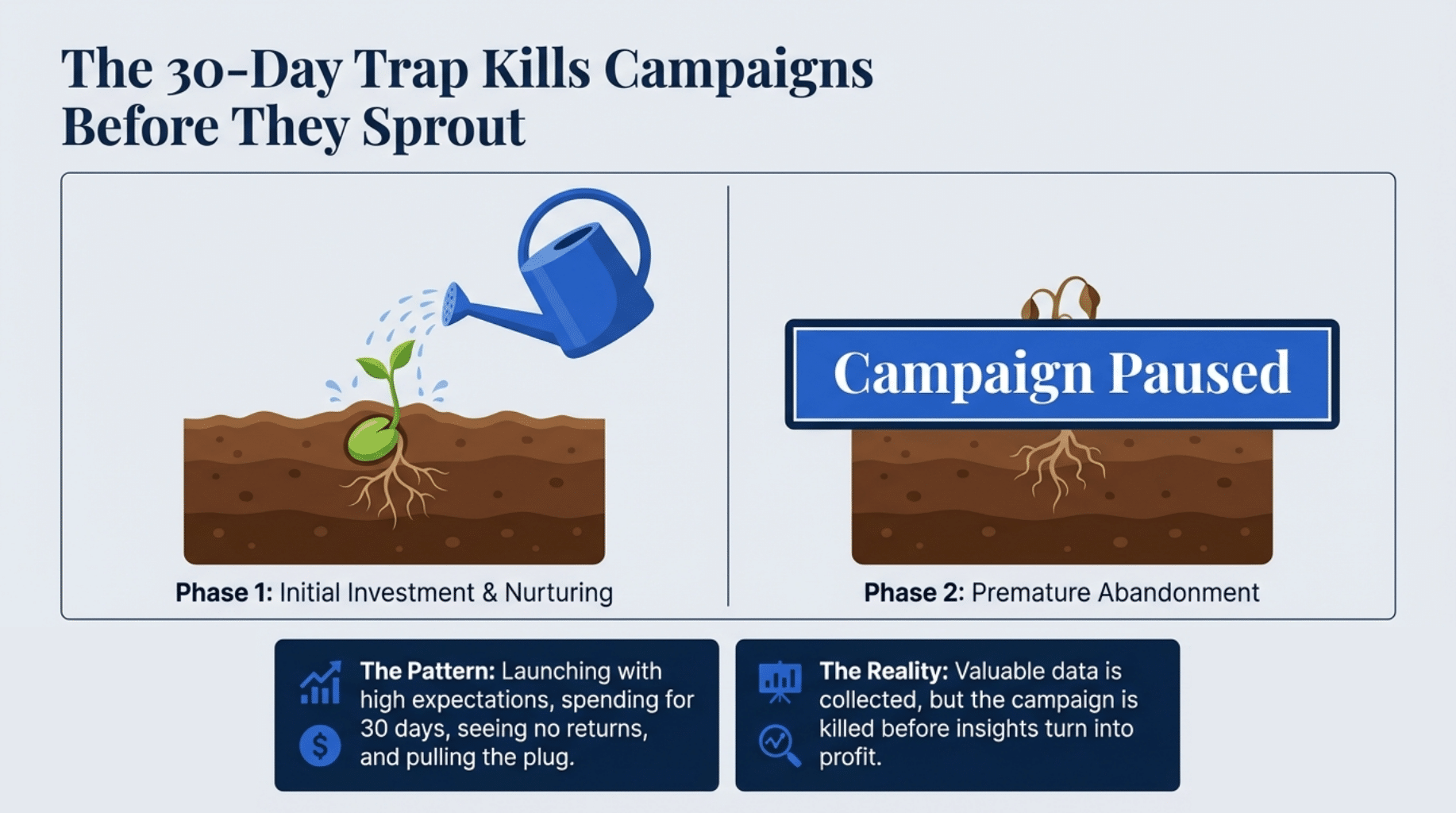
Most Google Ads campaigns fail before they have a chance to succeed. Setting up an effective advertising campaign requires patience, the right expectations, and a strategy that goes beyond the first month. We see this pattern repeatedly with Kansas small businesses. A business owner launches an advertisement with high expectations—only to pull the plug after 30 days of spending without significant results. Valuable data is collected, but the campaign ends before it can turn those insights into profit.
This is the advertising equivalent of planting seeds, watering them for a week, then abandoning the garden because nothing grew. At Wildman Web Solutions, we tell every client: Every Google Ads campaign needs a 90-day commitment. Here’s why that timeline matters, and how you can structure your first three months for success.
Why the First 90 Days of a Campaign Matter
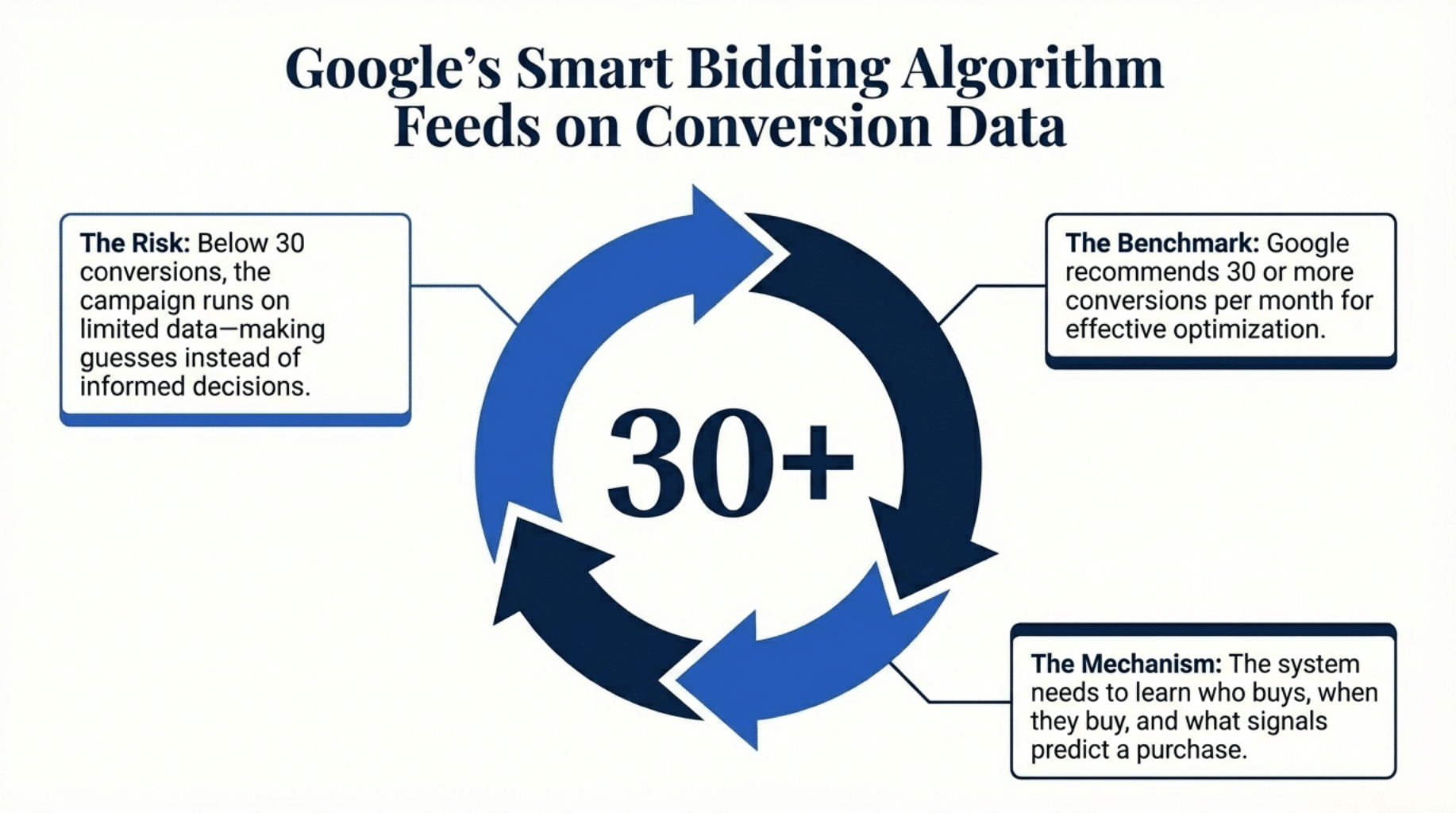
Google’s smart bidding algorithms learn from your data. In every Google Ads campaign, the system needs conversion information—who buys, when they buy, and what signals predict a purchase. Google recommends 30 or more conversions per month for effective optimization. Below that, your campaign is running on limited data, making guesses instead of informed decisions.
For example, a Lawrence retailer selling $50 products needs about $1,500 in tracked revenue per month to hit that benchmark. An Overland Park service provider with $500 projects would need $15,000 monthly. For most small business advertising campaigns, reaching meaningful volume takes time.
Month One: Data Collection
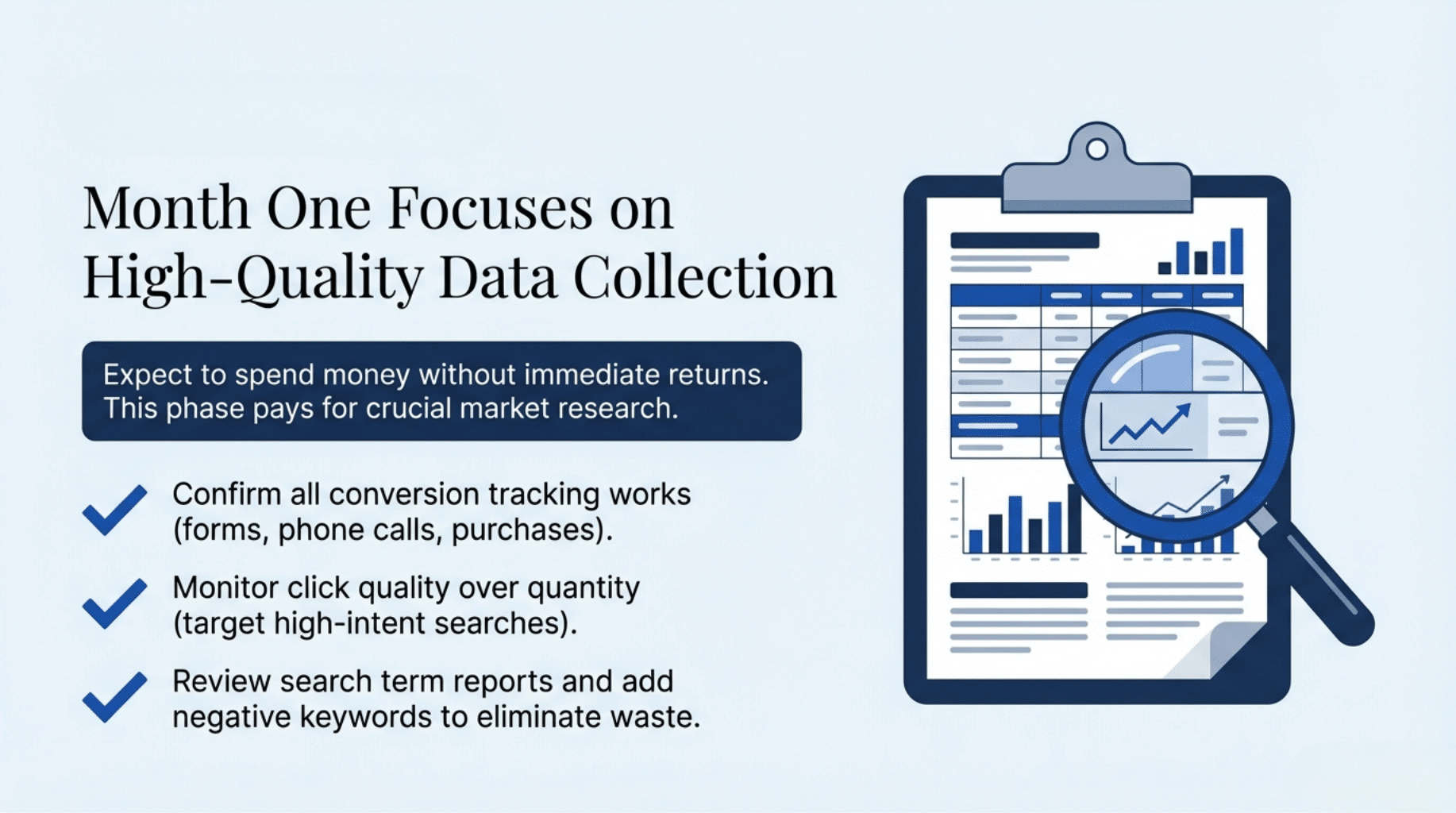
Your first 30 days are about gathering quality click data and validating your conversion tracking setup. You should expect to spend money without immediate returns. This phase pays for crucial market research.
Key steps in month one:
- Confirm every conversion tracking element works (form submissions, phone calls, purchases)
- Monitor click quality over quantity—target high-intent searches
- Review search term reports and add negative keywords to eliminate waste
- Set real budget expectations (Kansas small businesses should budget $1,500–$3,000 monthly). Spending below $1,500 rarely produces enough data for your Google Ads campaign to optimize.
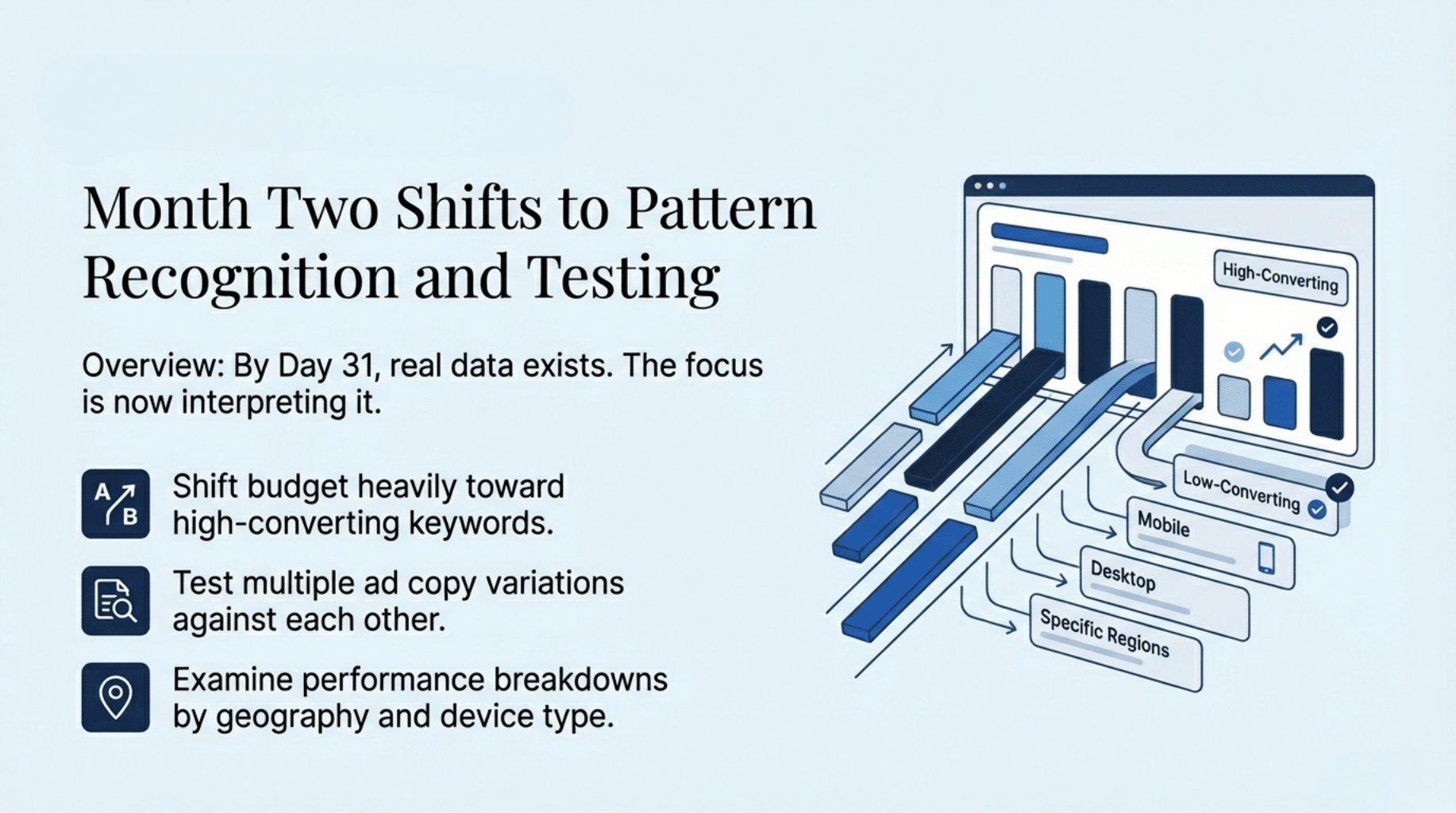
Month Two: Pattern Recognition and Testing
By day 31, your Google Ads campaign has generated real data. The focus now is interpreting it:
- Shift budget to high-converting keywords
- Test multiple ad copy variations
- Examine performance by geography and device
If three keywords account for 80% of your conversions, prioritize those in your ad. Adjust bids and targeting as you find what works best for your market.
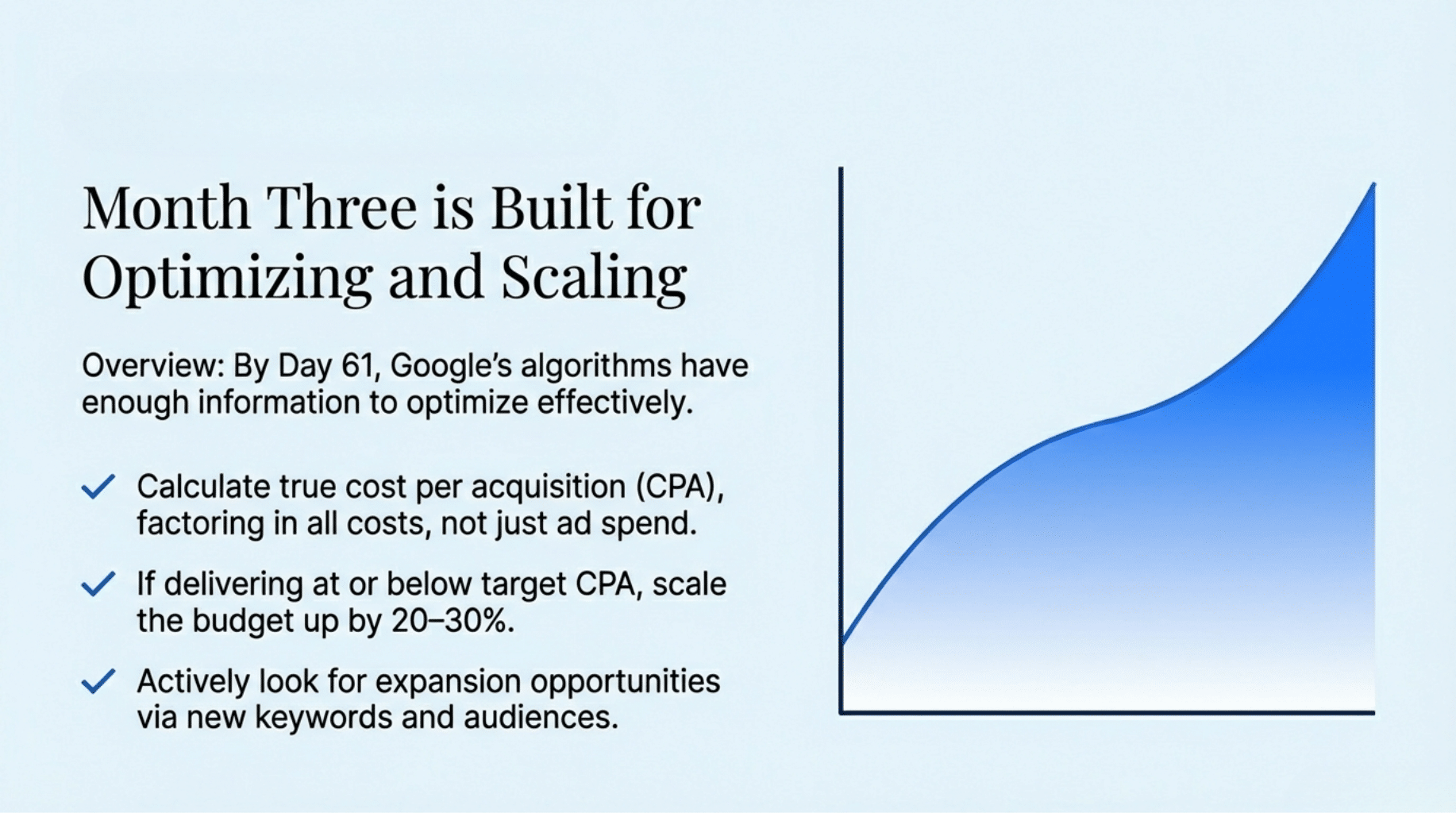
Month Three: Optimizing and Scaling
By day 61, your campaign has enough information for Google’s algorithms to optimize effectively. Now it’s time to:
- Calculate your true cost per acquisition (including all costs, not just ads)
- Decide whether to scale—if your Google Ads campaign delivers at or below your target acquisition cost, increase your budget 20–30%
- Look for expansion opportunities (new keywords, audiences)
The Kansas Small Business Advantage
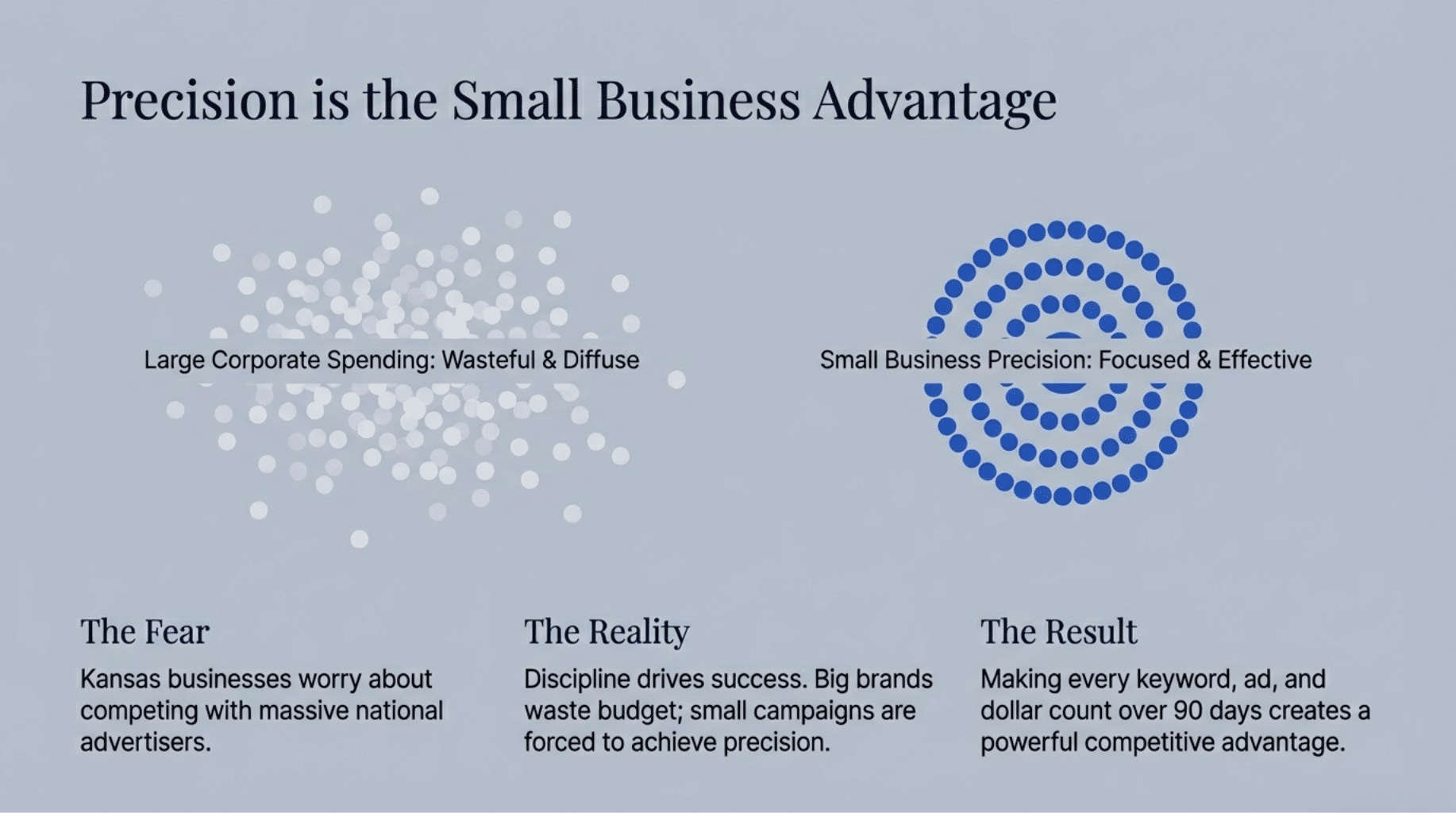
Kansas businesses with smaller budgets often worry about competing with national advertisers in Google Ads campaigns. The reality: discipline drives success. While big brands may waste budget, your Google Ads campaign can achieve precision. Every keyword, ad, and dollar should count. Over 90 days, this creates a powerful competitive advantage.
Signs Something’s Wrong With Your Google Ads Campaign
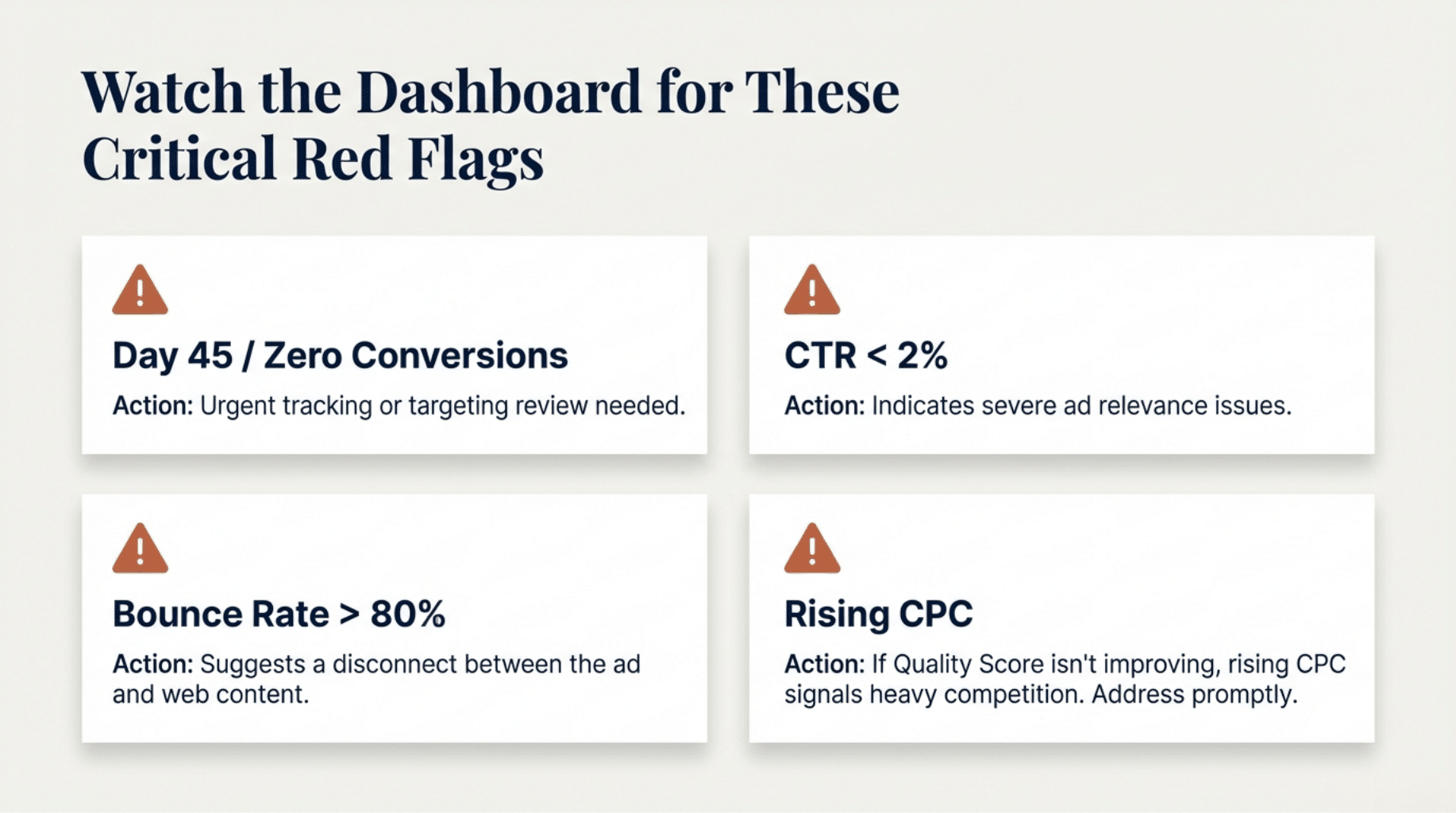
Don’t ignore these red flags during your Google Ads campaign:
- Zero conversions by day 45 means urgent tracking or targeting review is needed
- Click-through rates under 2% indicate relevance issues
- Landing page bounce rates above 80% suggest a disconnect between your Google Ads campaign and web content
- Rising costs per click without quality score improvement signal rising competition
Address issues promptly—optimization is ongoing.
Google Ads Campaign FAQs
How long should I run a Google Ads campaign to see results?
At least 90 days. This gives Google’s system time to learn who your best customers are and how to target them.
What is a realistic budget for a Google Ads campaign?
For most Kansas small businesses, $1,500–$3,000 a month. Too little, and you won’t collect enough data to improve.
What if my Google Ads campaign isn’t profitable after 90 days?
Review your offer, targeting, and landing pages. Sometimes it’s the ads, but sometimes it’s the business fit or website experience that needs adjustment.
Your Next Step
Ask yourself: are you investing or gambling in your Google Ads campaign? Investors commit for the full learning phase. They measure, adapt, and improve—gamblers quit early and miss out. If you’re ready to approach Google Ads with an investor mindset, commit to the process, calculate your 90-day budget, and get expert guidance if needed. Your next successful Google Ads campaign starts here.