

Small business automation with AI is changing how Kansas businesses operate. Owners often spend countless hours on repetitive tasks—summarizing documents, organizing data, drafting content, and sorting emails. AI can now handle much of this busywork, freeing up time for owners and their teams to focus on customers and business growth. But like any tool, if it’s not implemented carefully, automation can backfire and harm the relationships you’ve spent years building.
This is AI in 2026. For small business owners in Kansas, understanding the dynamics of small business automation will determine whether these tools help you grow or accidentally harm client trust and local reputation.

At our agency, we’ve tested dozens of AI tools over the past two years. Implementing small business automation has saved our clients hundreds of hours. But we’ve also witnessed how automation, when left unsupervised, can nearly torpedo relationships with tone-deaf output. The difference? Treat AI like a junior employee—full of speed and potential, but in need of oversight.
The Intern Test for Every Small Business Automation Task
Here is a simple framework we use before automating anything. We call it the intern test.
Picture a brand-new intern on their first day: eager, fast, but inexperienced about your business, your clients, and your community. Would you hand them this task and walk away?
If the answer is no, don’t hand it to AI unsupervised either—even for small business automation.
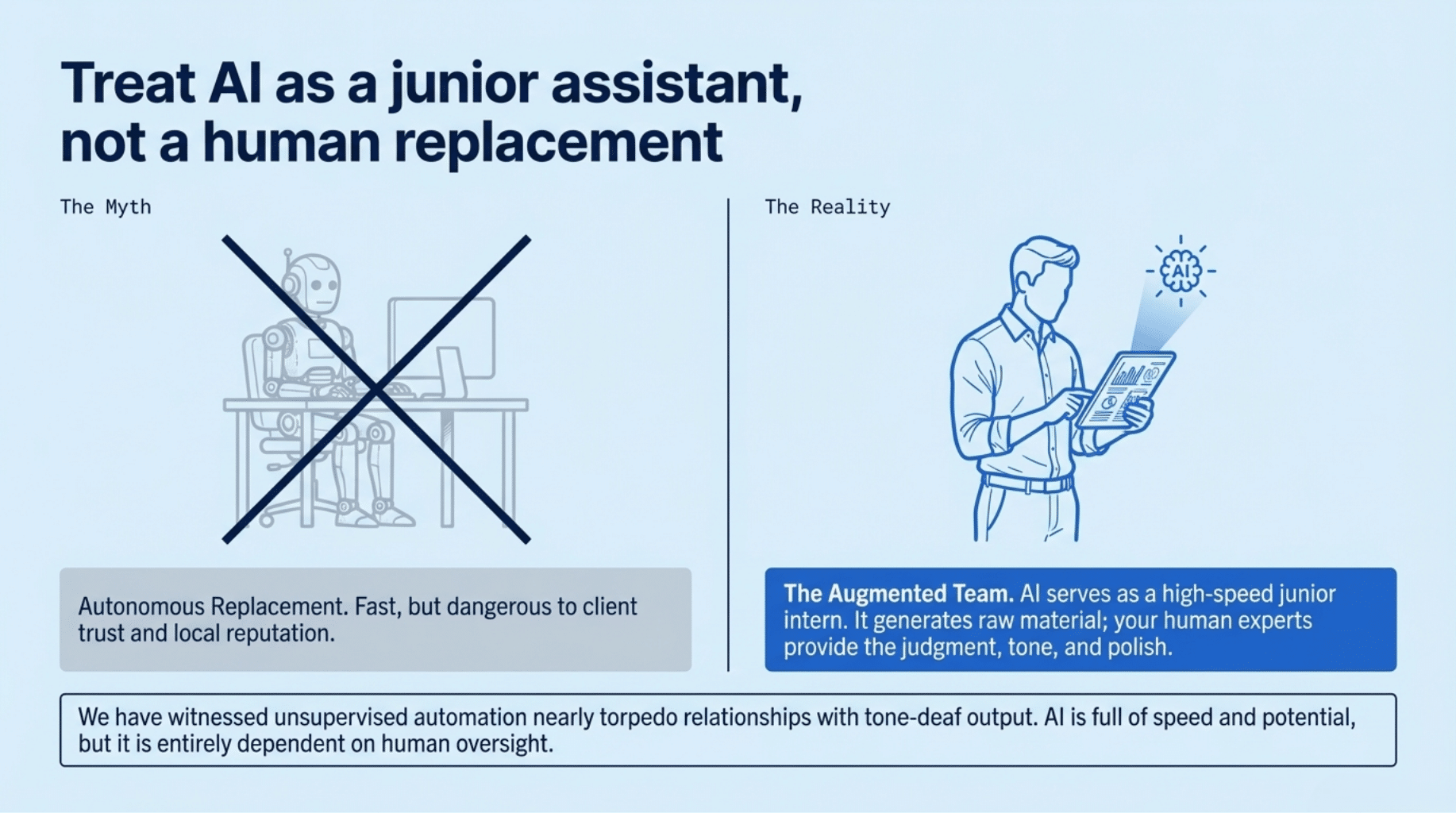
Tasks that pass the intern test: reformatting data, generating first drafts, summarizing long documents, creating meeting agendas, sorting emails into categories.
Tasks that fail the intern test: sending client communications without review, publishing social media posts, responding to customer complaints, writing proposals, anything involving pricing or commitments.
The key word is unsupervised. Small business automation works best when AI has your oversight. Problems start when business owners automate and forget.
The Amplify Model: Small Business Automation Done Right
Through our work with Kansas small businesses, we developed a three-part framework called the Amplify Model for small business automation. Miss one element, and the whole system breaks down.
Element One: Your Expertise
Your expertise is the judgment AI lacks. When a longtime customer in Topeka emails with a concern, you know whether to call or just reply. You understand which clients appreciate humor and which want facts. AI cannot automate that knowledge.
Element Two: Documented Processes
AI needs clear instructions for successful small business automation. Telling it to “write something good” produces generic content. Giving a detailed, documented process—like how your company handles rescheduling for a commercial client—results in usable output. Spend a couple of hours documenting your methods, then update monthly.
Element Three: Strategic Automation
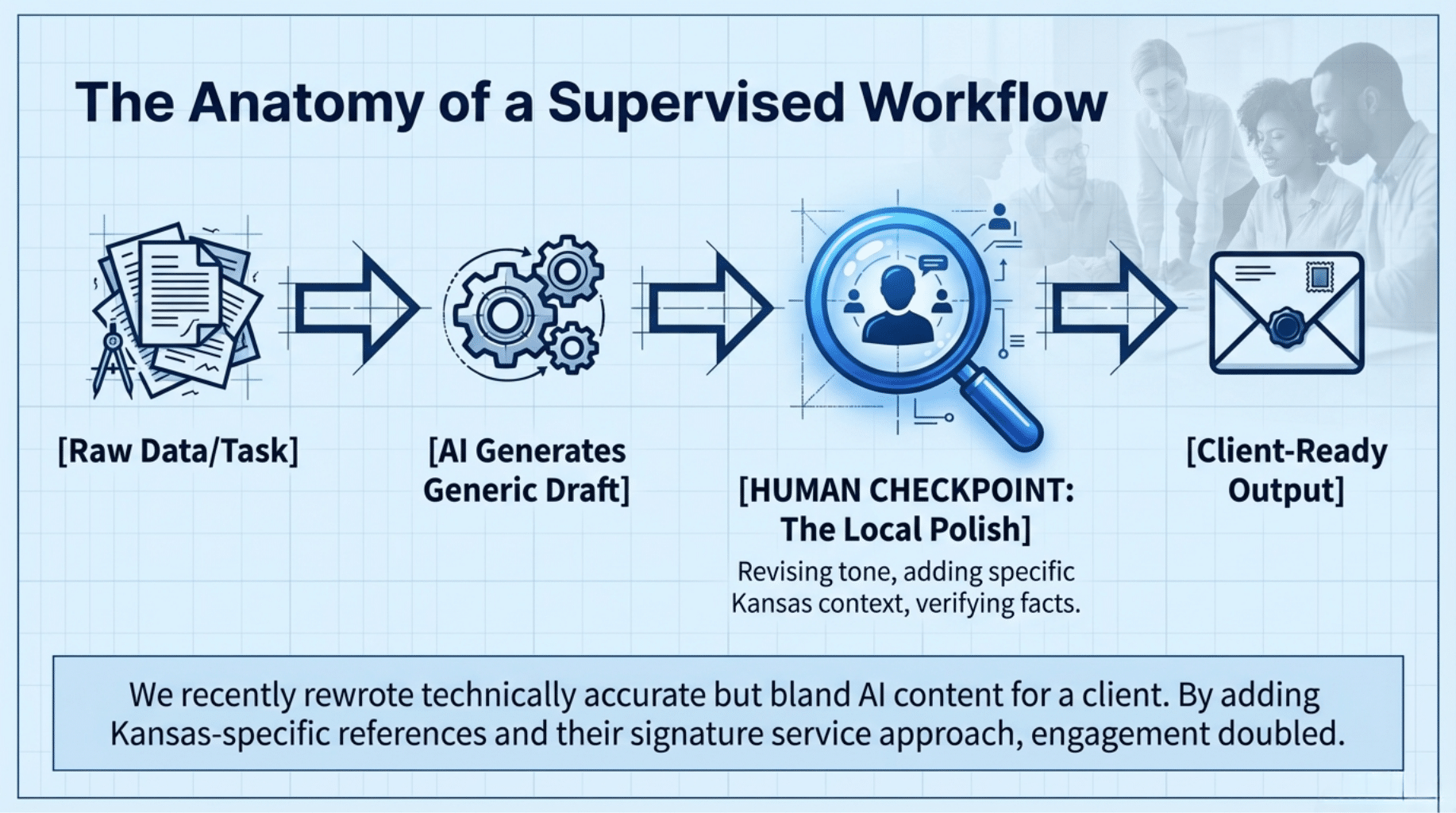
Automate reversible tasks only. For true small business automation, always set mandatory human checkpoints for anything affecting client relationships or public reputation. That way, you catch and fix errors before they matter.
Why Kansas Businesses Face Higher Stakes with Small Business Automation
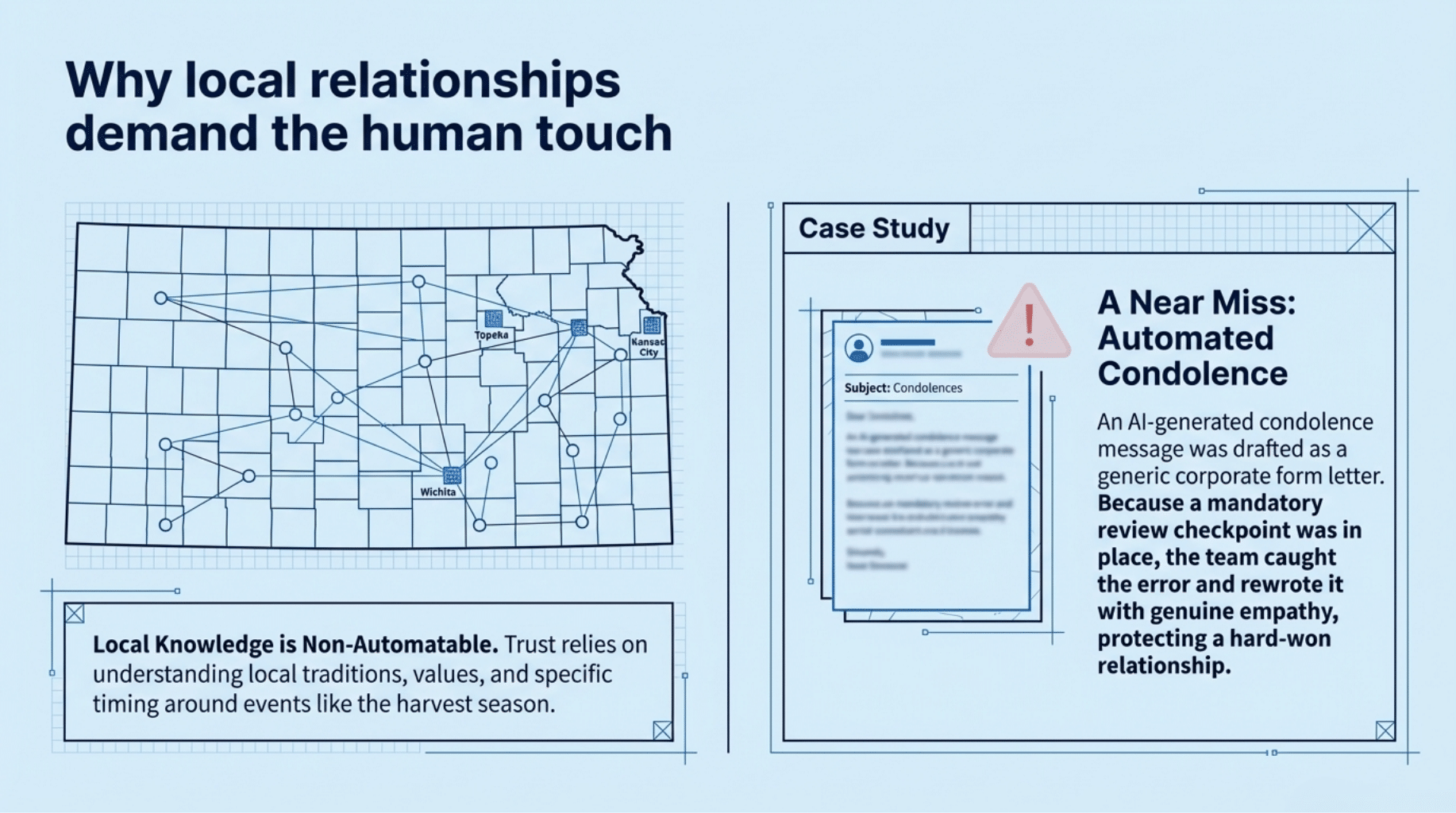
Small businesses in Kansas rely on relationships and community trust. An AI-generated email that misses the mark can damage hard-won trust overnight. Local knowledge—knowing your clients’ businesses, values, and even things like timing around the harvest season—ensures your automation supports, not undermines, your service.
A client recently told us how automated condolence messaging nearly caused a big mistake. The AI’s version sounded like a corporate form letter. Because they reviewed it, they caught the error and rewrote it with genuine empathy. Automation works, but only with the right local expertise and oversight.
Practical Steps for Implementing Small Business Automation
Start with low-risk, high-volume tasks:
- Use AI for internal summaries and research: Let automation compile industry news, competitor details, or meeting notes.
- Draft content for review: AI writes first drafts of blog posts, social captions, and newsletters. You edit for tone and local relevance.
- Build template libraries with AI: Create variations for emails and messages, keep what works best, and build a library of effective templates over time.
- Automate data organization: Let AI sort customer feedback, sales data, and market research to save more time.
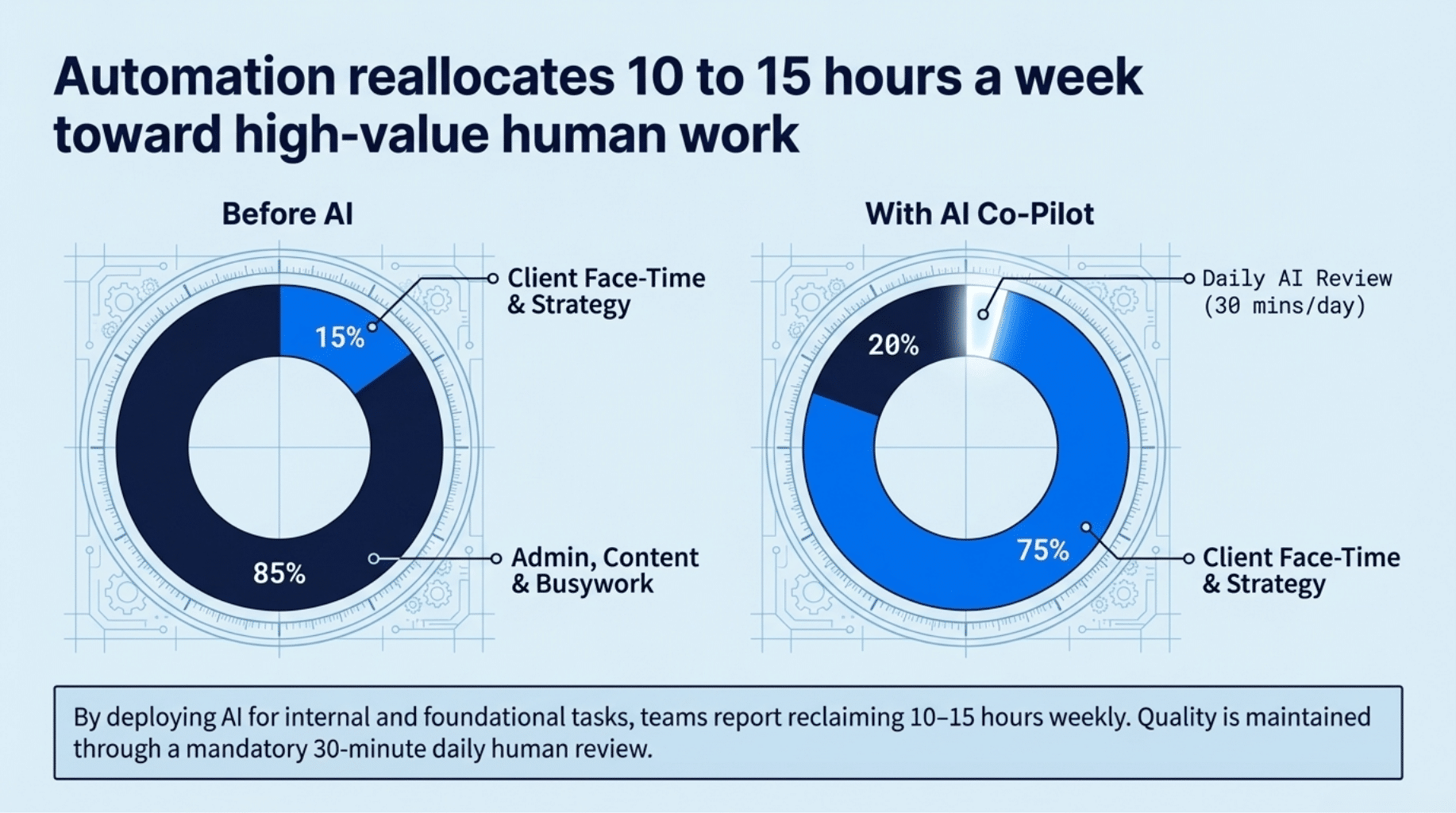
By applying these small business automation strategies, business report saving 10–15 hours weekly on admin and content tasks—while maintaining quality with just 30 minutes per day of review.
The Human Elements That Win
As small business automation and AI become universal, your competitive advantage is the human element only your business can provide: specific stories about serving Kansas customers, understanding which local traditions and phrases matter, and offering the personality AI can’t.
We recently rewrote a client’s AI-generated content that was technically accurate—but bland. After adding Kansas-specific references and their signature approach to service, engagement doubled. That’s the power of blending automation with human expertise.
FAQs on Small Business Automation
Q: What is the safest way to start with small business automation?
A: Begin with internal, low-risk tasks (like research summaries or draft content) that don’t reach customers directly.
Q: What are the common mistakes in small business automation?
A: Automating tasks without human review and failing to document company processes are the biggest risks.
Q: How much time can Kansas small businesses realistically save?
A: Most see a 10–15 hour weekly reduction in admin/content work—with about 30 minutes per day needed to review AI output.
Your Next Step in Small Business Automation
Audit your current automation use this week. List every customer-facing task powered by AI. Apply the intern test to each one. For any that fail, add a human review checkpoint before output goes live.
If you want help building a small business automation plan that protects your reputation while saving real time, check out our small business automation services. We help Kansas businesses set up systems that amplify human expertise—not just replace it.