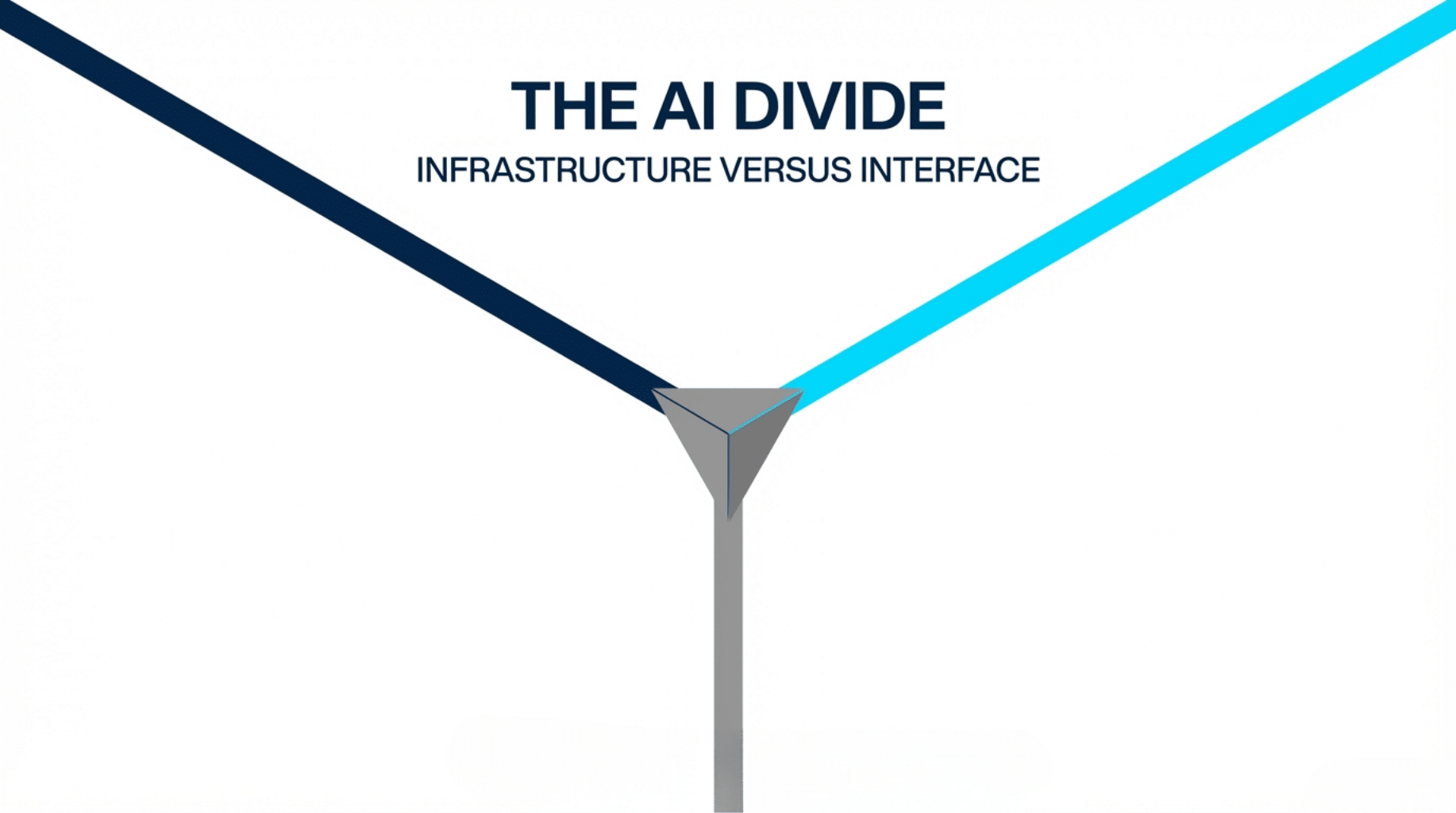
The AI ecosystem is splitting into two distinct paths. Which one wins will shape how every business interacts with technology for the next decade.
I think about this question a lot. As someone building AI-powered applications for businesses, I have a stake in the answer. But this goes beyond any single company. This is an architectural question about how an entire industry gets built.
Let me lay out both paths.
Path 1: AI as Utility (The Diverse Ecosystem)
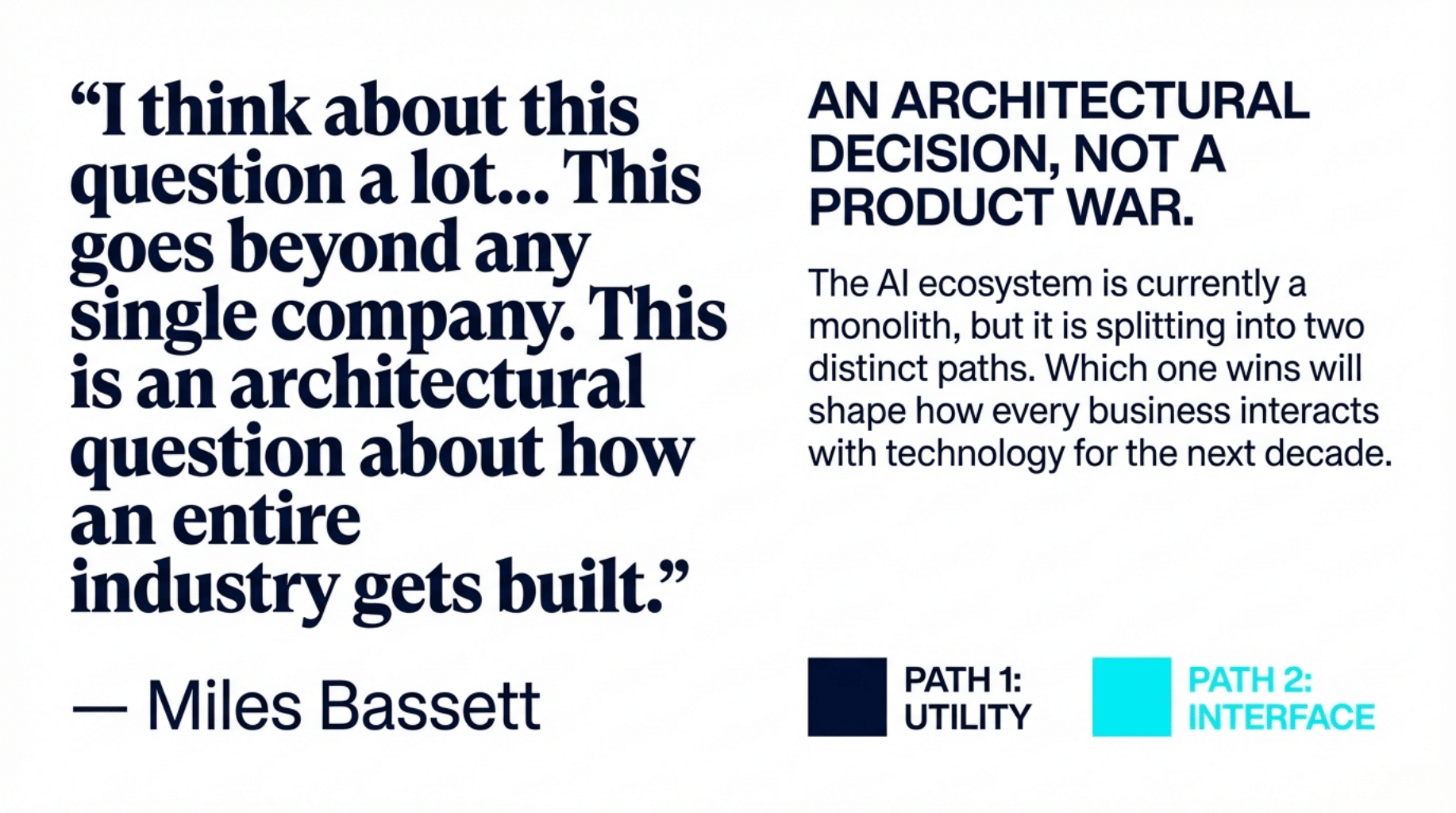
In this model, foundational AI models like Claude, ChatGPT, and Gemini become infrastructure. They operate in the background, the same way electricity powers your appliances without you thinking about the power grid.
Independent developers build custom applications on top of these models. Those applications handle the logic, the user experience, the specific business problem. When the app needs intelligence, it makes a call to an AI model, gets a result, and delivers it to the user.
The user never interacts with Claude or ChatGPT directly. They interact with purpose-built software designed for their specific needs. A restaurant owner uses an AI-powered scheduling tool. A contractor uses an AI estimating system. An accountant uses an AI document processor. Each application is built by someone who understands that industry and that workflow.
Think of how the early internet developed. The browser was the interface, but the real value lived in millions of independent websites and web applications. No single company controlled the experience. Developers built for specific audiences and specific problems. The result was an explosion of innovation, competition, and choice.
This path leads to the same kind of diversity. AI-assisted development tools are already making it possible for small teams to build sophisticated applications that would have required large engineering departments five years ago. The barrier to entry keeps dropping. The number of purpose-built AI applications keeps climbing.
In this future, the AI models are powerful, essential, and invisible to the end user.
Path 2: AI as Interface (The Platform Model)
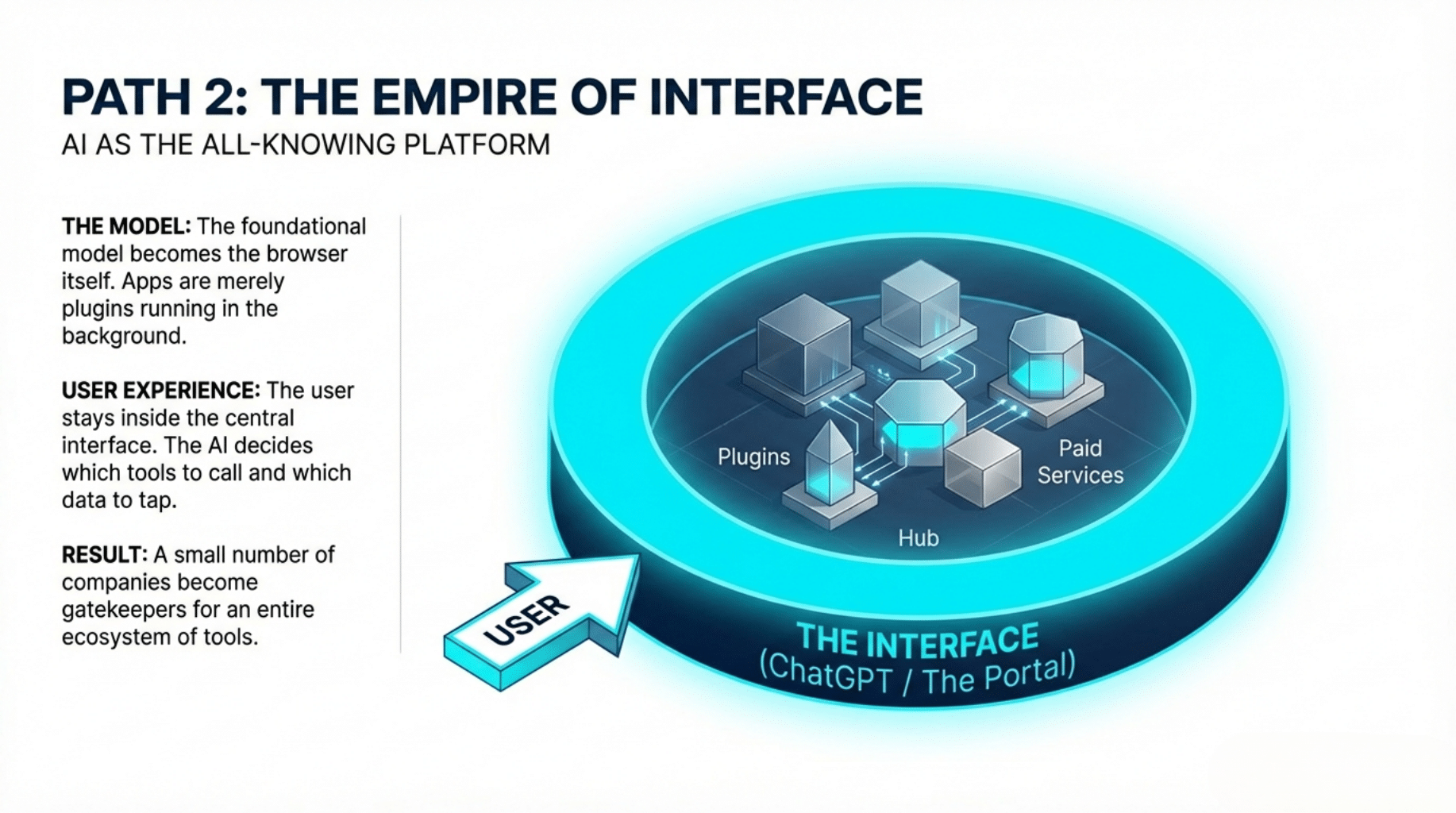
In this model, the foundational AI models become the primary way users interact with everything. ChatGPT, Claude, or Gemini becomes the browser itself, not the infrastructure behind it.
This is already happening in the ChatGPT ecosystem. Developers build GPT apps that plug into the platform. But the end user rarely sees those apps directly. They ask ChatGPT a question. ChatGPT decides which tools to call, which apps to engage, which data sources to tap. The user stays inside the ChatGPT interface the entire time.
Some of these background apps are paid services. The AI platform pays for premium data or capabilities to serve its subscribers. Developers build for the platform, through the platform, and are accessed by users only through the platform.
The historical parallel here is the app store model. When Apple launched the App Store, it created enormous opportunity for developers. But Apple controlled the interface, the distribution, the payment processing, and the rules. Developers built within Apple’s ecosystem, on Apple’s terms. The value creation was real. So was the consolidation of power.
In this future, most users interact with one of three or four AI platforms. Those platforms become the gatekeepers for an entire ecosystem of tools, services, and applications running in the background.
The Tension
Path 1 produces diversity. More builders. More specialized solutions. More competition. Users choose applications built for their specific needs by people who understand their specific problems. The AI layer is powerful but commoditized, like cloud computing or electricity.
Path 2 produces convenience. One interface for everything. No need to evaluate dozens of applications. The AI platform figures out what you need and delivers it. The experience is seamless. The tradeoff is that a small number of companies control how billions of people access AI-powered services.
I find Path 1 more interesting. A diverse ecosystem of independent builders creating purpose-built applications leads to more innovation, more competition, and better outcomes for end users. The early internet proved that decentralized innovation outperforms centralized control over time.
But Path 2 has momentum. Convenience wins in consumer markets. Most people will choose one interface that does everything over evaluating and managing multiple specialized tools. ChatGPT’s platform strategy is already pulling developers into its orbit. The gravitational pull of a billion-user platform is hard to resist.

Why This Matters Now
This is not an academic question. The architecture decisions being made right now, by AI companies, by developers, by businesses choosing which tools to adopt, are setting the trajectory.
If you are a developer building AI applications, your business model looks very different depending on which path wins. In Path 1, you own the customer relationship. In Path 2, you are a supplier to a platform that owns the customer.
If you are a business adopting AI tools, this affects your long-term flexibility. Purpose-built applications from independent developers give you choice and the ability to switch. Platform-dependent tools tie your operations to a single provider’s roadmap.
If you are a consumer, this determines whether your AI experience looks like the open web or a walled garden.
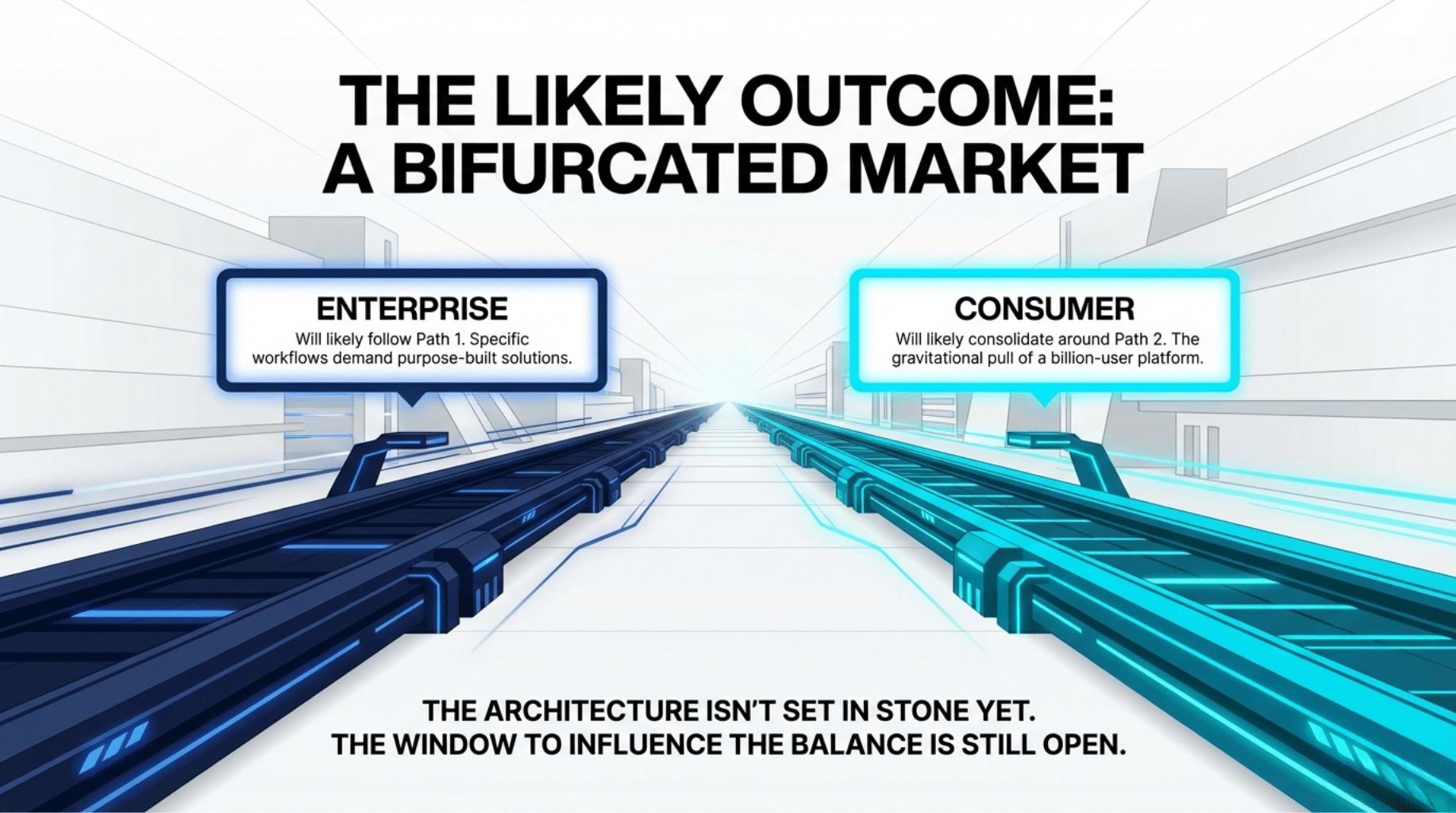
Both paths will likely coexist to some degree. Enterprise and specialized business applications will probably follow Path 1, where specific workflows demand purpose-built solutions. Consumer experiences may consolidate around Path 2, where convenience matters most.
But the balance between these two paths will define the AI ecosystem for a generation. And right now, the window to influence that balance is still open.