AI Chatbot vs AI Agent: Why Kansas Small Businesses Need to Know the Difference
 Wildman Web Solutions
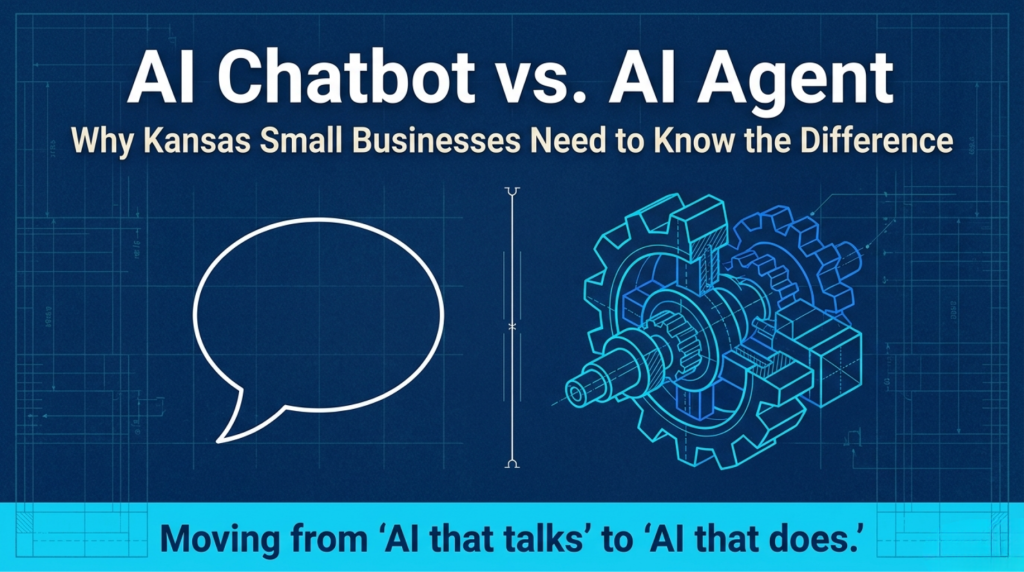
Most business owners in Kansas—from the bustling corridors of Wichita to the local service shops in Lawrence—have grown accustomed to the “chat bubble” at the bottom of a website. For years, that bubble represented a chatbot: a helpful, if sometimes limited, tool designed to answer basic questions. But in the conversation of AI chatbot vs AI agent, it’s crucial to understand just how much things have changed.
However, as we move through 2026, a fundamental shift is occurring. We are moving away from systems that simply “talk” and toward systems that “do.” This is the era of the AI Agent. While a chatbot and an agent might look identical on your website’s front end, the difference in their back-end capability is the difference between a conversation and a completed task.
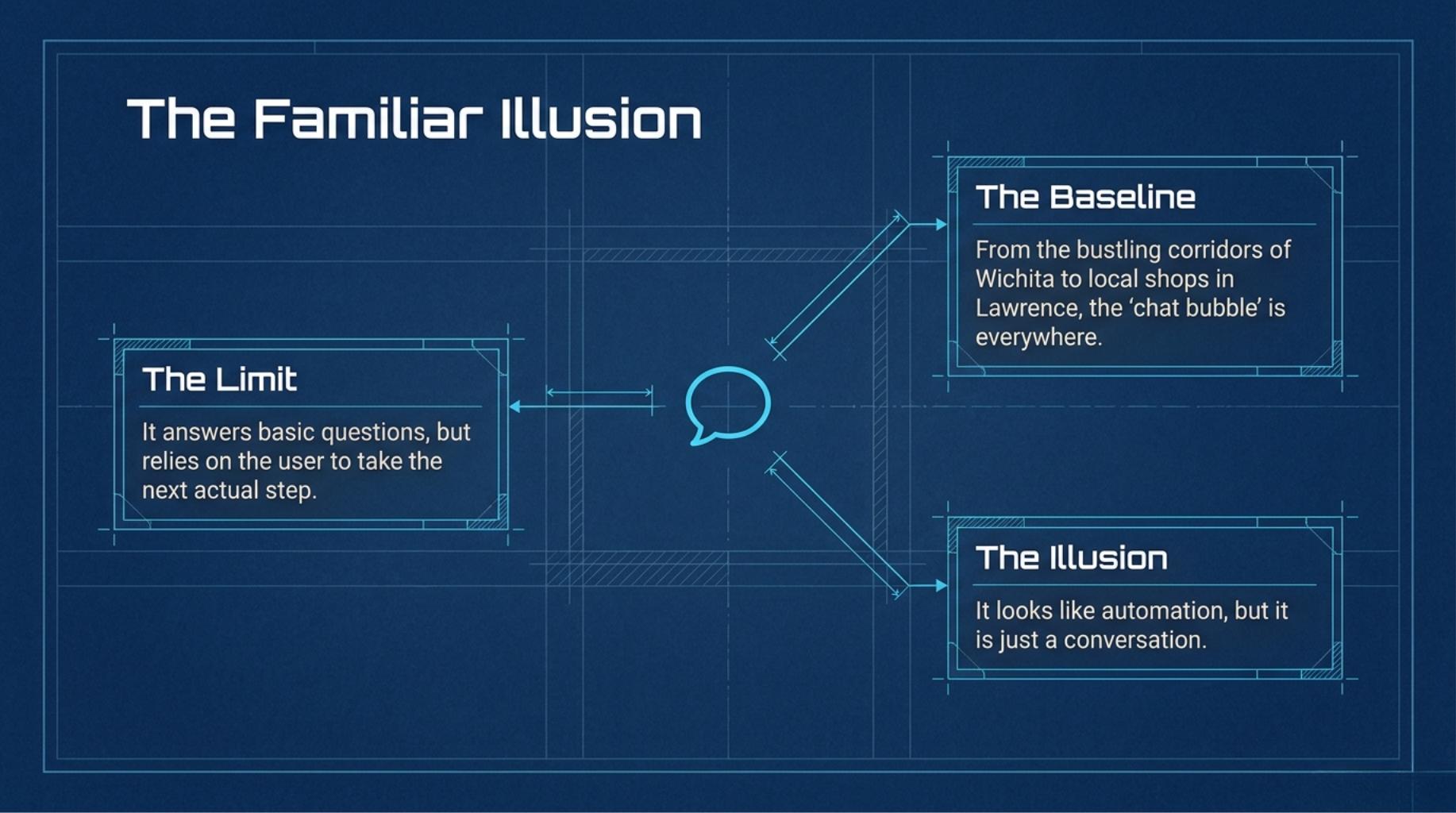
For a Kansas small business owner, understanding the distinction between an AI chatbot vs AI agent is no longer a matter of technical trivia—it is a strategic necessity for reclaiming your time and scaling your operations.
Key Takeaways
- Chatbots are Reactive: They interpret text and provide relevant information or scripts based on user prompts.
- Agents are Proactive: They use reasoning to break down complex goals, use external tools, and execute multi-step workflows autonomously.
- The Outcome Gap: While a chatbot resolves a conversation, an AI agent resolves a business problem by acting across your CRM, calendar, and billing systems.
What is an AI Chatbot?
An AI chatbot is a conversational interface. Its primary job is to interpret a user’s question and provide a relevant text-based response. Powered by Large Language Models (LLMs), modern chatbots are significantly more fluid than the rigid “if-then” bots of the past. They excel at:
- Answering FAQs
- Capturing basic lead information (name, email, phone)
- Providing general business information (hours, location, services)
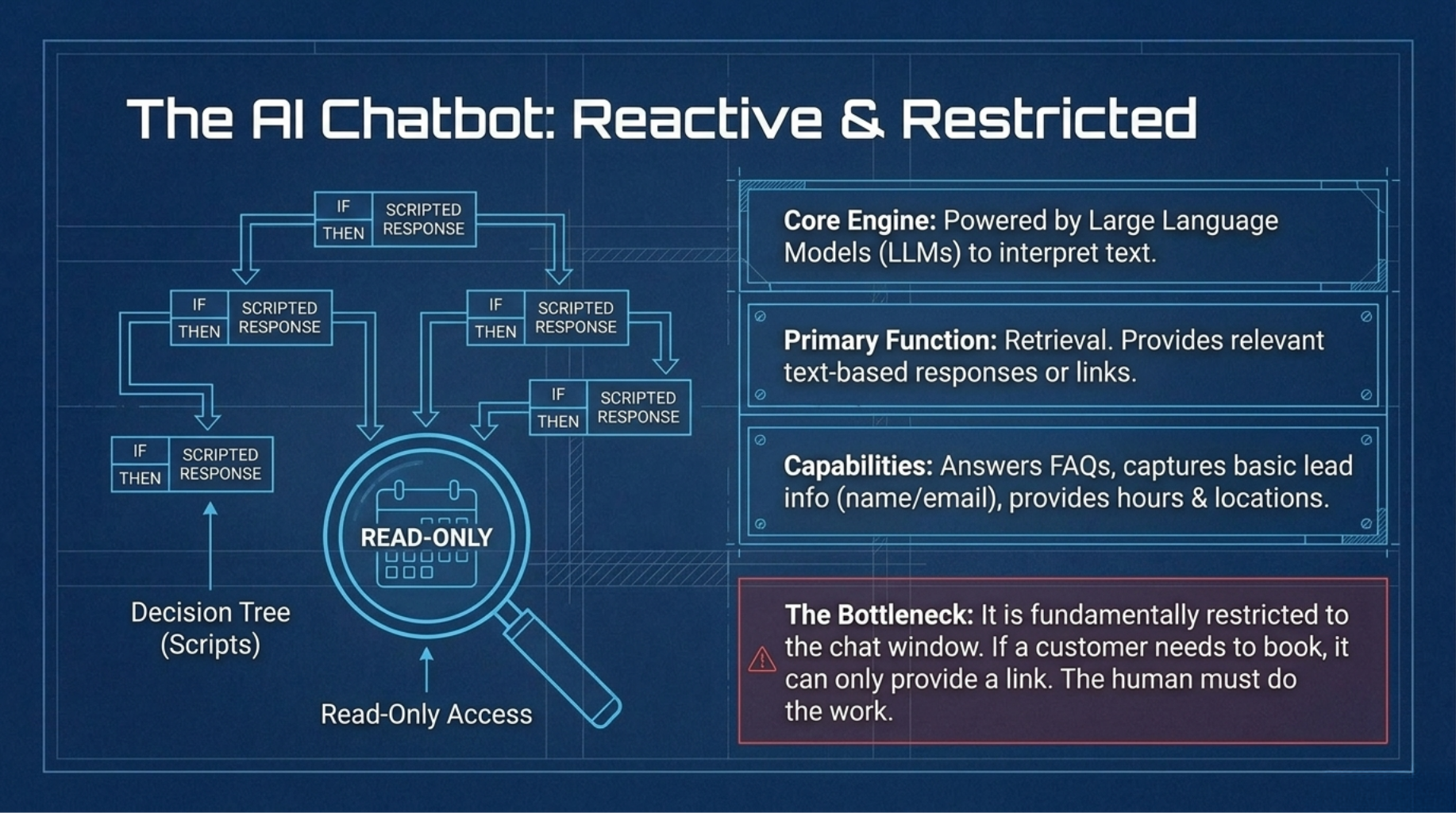
The defining characteristic of a chatbot is that it is fundamentally restricted to the chat window. It waits for the user to ask a question, provides an answer, and then waits again. If a customer asks, “How do I book an appointment?” a chatbot will provide a link to your booking page. It has provided information, but the task of booking still falls on the human.
What is an AI Agent?
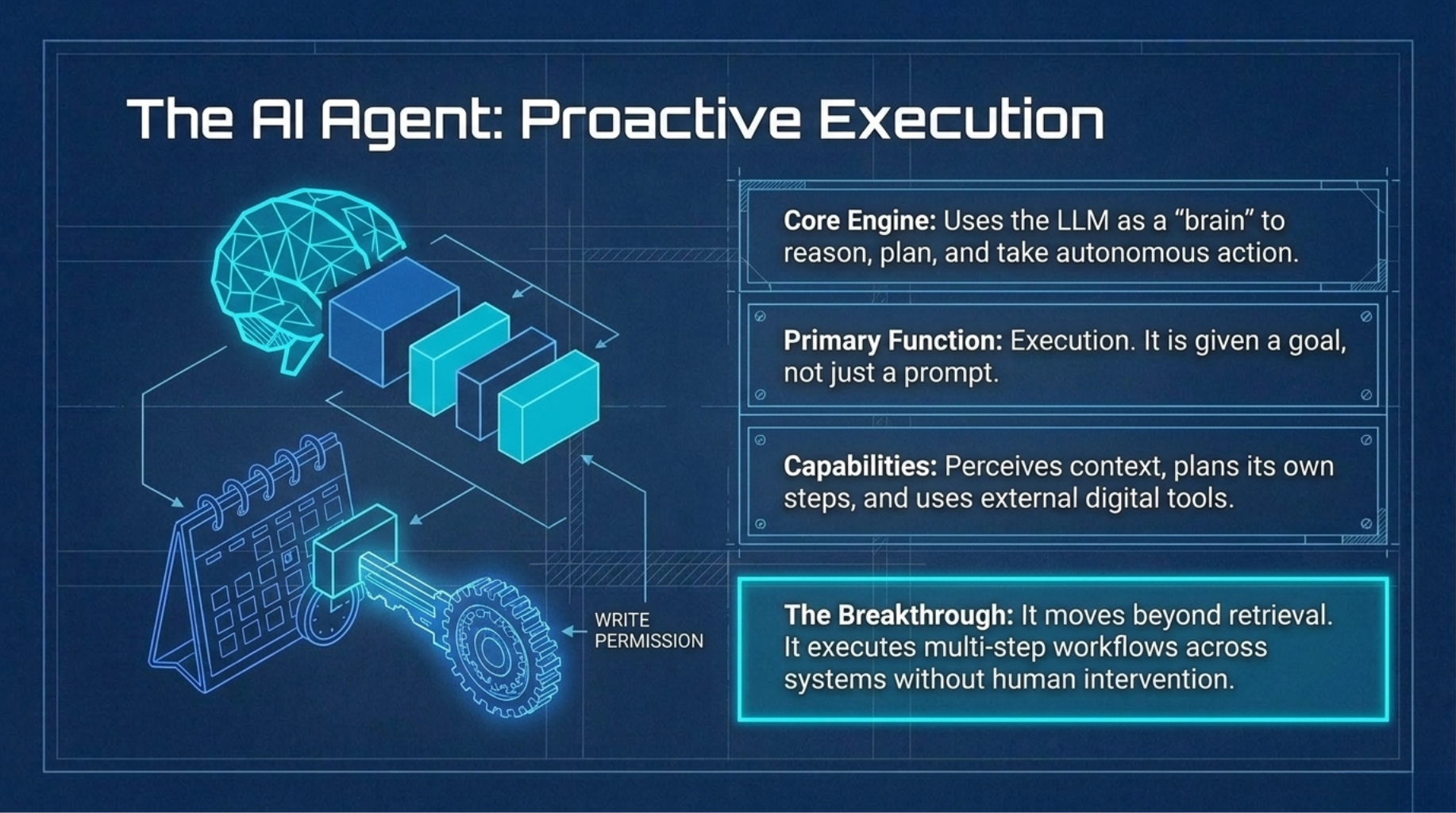
An AI agent is a digital worker that uses an LLM as its “brain” to reason, plan, and take action. Instead of just answering a question, an agent is given a goal. It perceives context, plans its own steps, and uses digital tools to reach that goal.
In a practical Kansas business scenario, if a customer tells an AI agent, “I need to book a plumbing repair for Tuesday,” the agent doesn’t just send a link to your contact page. It:
- Checks your Google Calendar for availability.
- Verifies the customer’s address.
- Offers specific time slots.
- Books the appointment once selected.
- Sends a confirmation email and text.
- Notifies your technician.
The AI agent has moved from retrieval to execution. It has completed a multi-step workflow without a human having to prompt every individual action.
AI Chatbot vs AI Agent: The Operational Difference
The real difference lies in permissions and integration. While a chatbot is often a “read-only” system that matches keywords to provide advice, an AI agent is an operational layer with “write” permissions.
Chatbots rely on pattern matching to manage routine, predictable interactions. They work best for high-volume FAQs or simple order status checks. In contrast, AI agents utilize contextual reasoning and predictive analytics to resolve complex technical troubleshooting or revenue operations. An agent doesn’t just respond to a prompt; it executes a goal by interacting deeply with your CRM, billing, and inventory systems.
Why the Distinction Matters for Kansas Businesses
In 2026, the “chatbot failure tax” is becoming real. This is the cost of paying for a system that still requires your staff to do the manual follow-up work. For a small business in Topeka or Overland Park, every minute spent manually moving data from a chat window to a CRM is a minute lost to serving customers.
AI agents are growing nearly twice as fast as traditional chatbots because they replace manual labor hours. Salesforce reports that reps using AI tools are saving an average of 12 hours per week on administrative work. For a business owner, that is more than a full day reclaimed every single week. Furthermore, AI agents have been shown to drive up to a 67% sales uplift in e-commerce environments by providing immediate, action-oriented responses.
How Wildman Web Solutions Bridges the Gap
At Wildman Web Solutions, we don’t build passive chatbots. We build real technology solutions—integrations, automated workflows, and “Smart Sites”—that actually work. Every system we deploy is designed to act as a digital employee, available 24/7 with no breaks or sick days. We understand that for a local business, technology is only valuable if it actually saves you time, increases your revenue, and moves the needle on your business outcomes.
FAQs
Are AI agents more expensive than chatbots?
While the initial setup for an AI agent can be higher due to integration requirements, the ROI is typically much greater because they replace manual labor rather than just providing information.
Is an AI agent safe to use with my customer data?
Yes. Modern agents are built with strict governance and permission layers, ensuring they only access and update the specific data necessary to complete their assigned roles.
Conclusion
The shift from “AI that talks” to “AI that does” is the most significant change for small business technology this year. By moving from a reactive chatbot to a proactive AI agent, you aren’t just improving your website—you are hiring a digital employee that never sleeps and never misses a follow-up.
If you’re wondering how AI agents could reclaim your time and scale your operations, we’d love to help you find the right solution. Contact us today or book a strategy call to learn more about how we can help you implement AI that actually works for your Kansas business.